

This herby, hariyali imli chutney (aka green imli chutney) is delicious and super versatile. It pairs so nicely with tikka, boti, seekh kabab, pretty much any of your favorite desi BBQ dishes. You'll also love it with samosas, pakoras, sandwiches, parathas, rolls, bun kababs, chaat – I could go on and on.
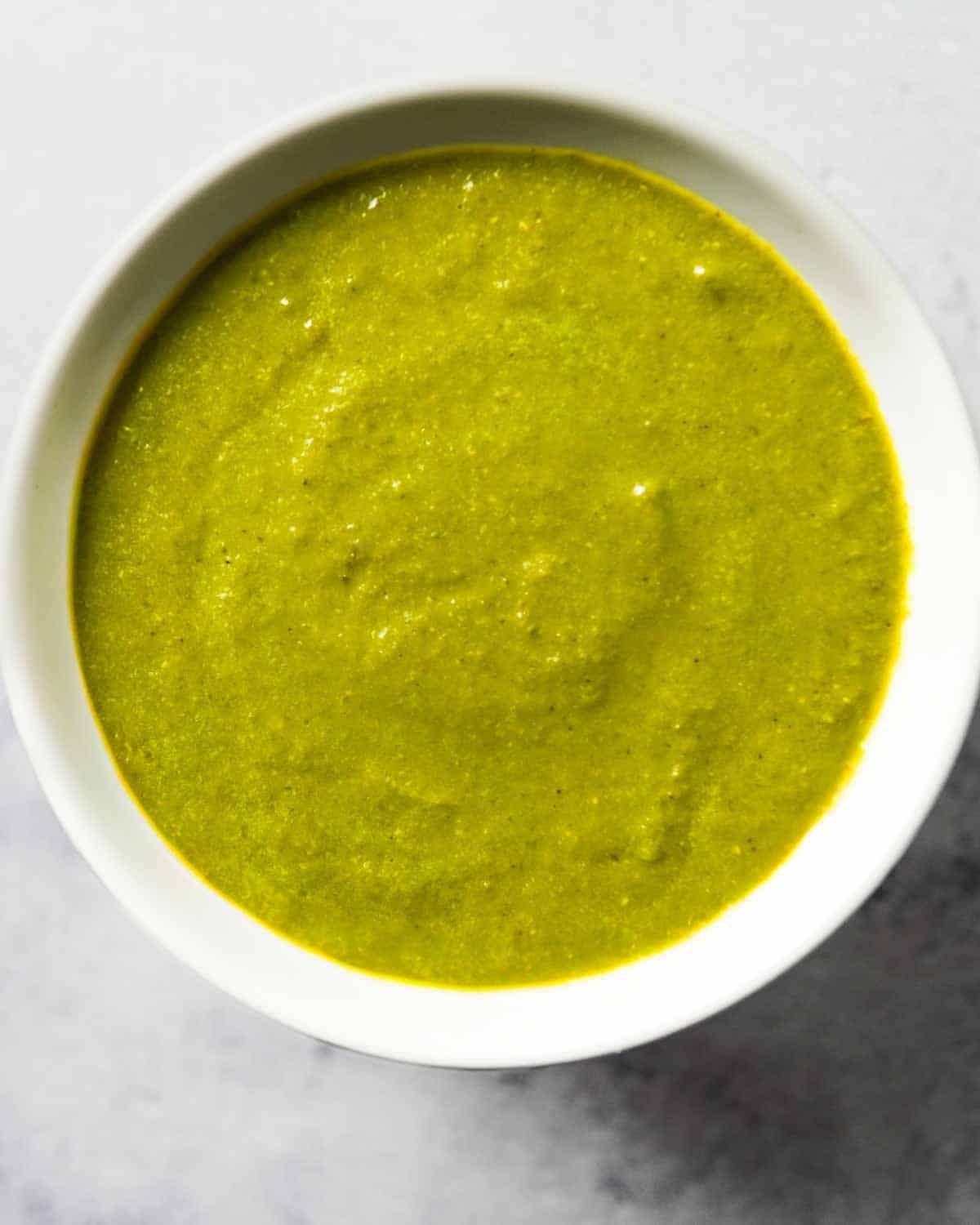
My refrigerator always has some kind of tamarind chutney, obviously homemade, because it's such an easy way to level up your food. Just having it as a condiment with your meals, alongside some kachumbar, can just make such a difference.
Store-bought chutney doesn't even come close to the fresh, vibrant flavors.
You won’t find a Pakistani household, probably not even any South Asian household, that doesn’t have its own imli/tamarind chutney recipe. But your gal here has a few different ones.
There’s this green, cilantro-based version I’m sharing with you today, then there’s a Meerut (my childhood favorite BBQ spot in Karachi) inspired one, a sweet and savory one, another one I make with dates, one that uses kairi (unripe mangoes), and there’s a yogurt version too. Phew, that was a long list.
And yep, I plan on sharing all those different recipes with you.
Back to the chutney we’re talking about here. I make this one when I want coriander/ cilantro chutney and tamarind chutney put together, but better.
Oh, and even though tamarind’s in the mix, you’re still getting a green chutney. There’s a little trick to it, but I’ll fill you in on that later.
Another good thing about any imli chutney is that it keeps really well in the fridge, thanks to all that acidity. And this one’s no different, as long as you store it in an airtight jar.
This is one of those recipes you'll want to bookmark, because everyone you serve this chutney to will be asking for it.
Pre-prep notes
Chutney recipes are usually pretty easy, but a few extra notes on process and ingredients never hurt, right?
- Most grocery stores these days carry seedless tamarind (imli) in the international food aisle, but if you can't find it, try an Indian or Asian store.
- Seedless is better, but regular tamarind works too – just use a bit more tamarind pulp in that case.
- Ice cubes – that’s the secret I was talking about earlier. I know it might sound unusual, but when you puree food in a high-speed blender (FYI- I prefer bullet blenders), they generate heat, and that heat breaks down the chlorophyll (color) in the herbs. So, I add ice to counteract that heat. Also, blending in short pulses helps prevent the heat from building up inside the jar.
- Don’t skip the black salt. It adds a really nice, unique touch. Even though it’s called black salt, it actually looks pinkish.
- Please don’t use store-bought ginger paste, it has to be fresh ginger.
- I use Thai (bird’s eye) chilies, but you can swap in other types too. Avoid serranos, poblanos, or any thick-walled chilies since they don’t work well in this recipe.
- Fresh cilantro (aka coriander) comes in different bunch sizes, so I can’t give you an exact measurement by bunch. Aim for about 30-35 sprigs, but don’t worry about being too precise. I use both the leaves and stems for the best flavor and texture, but I do trim off the bottom few inches of the stems. Be sure to wash it well before using.
- And don’t worry about the sugar, it won’t sweeten your chutney, it just helps balance out the tartness.
A visual guide for making Hariyali imli chutney
This chutney comes together in no time. All you need to do is blend the ingredients. But since some people prefer visual steps, I've shared the process with photos here.
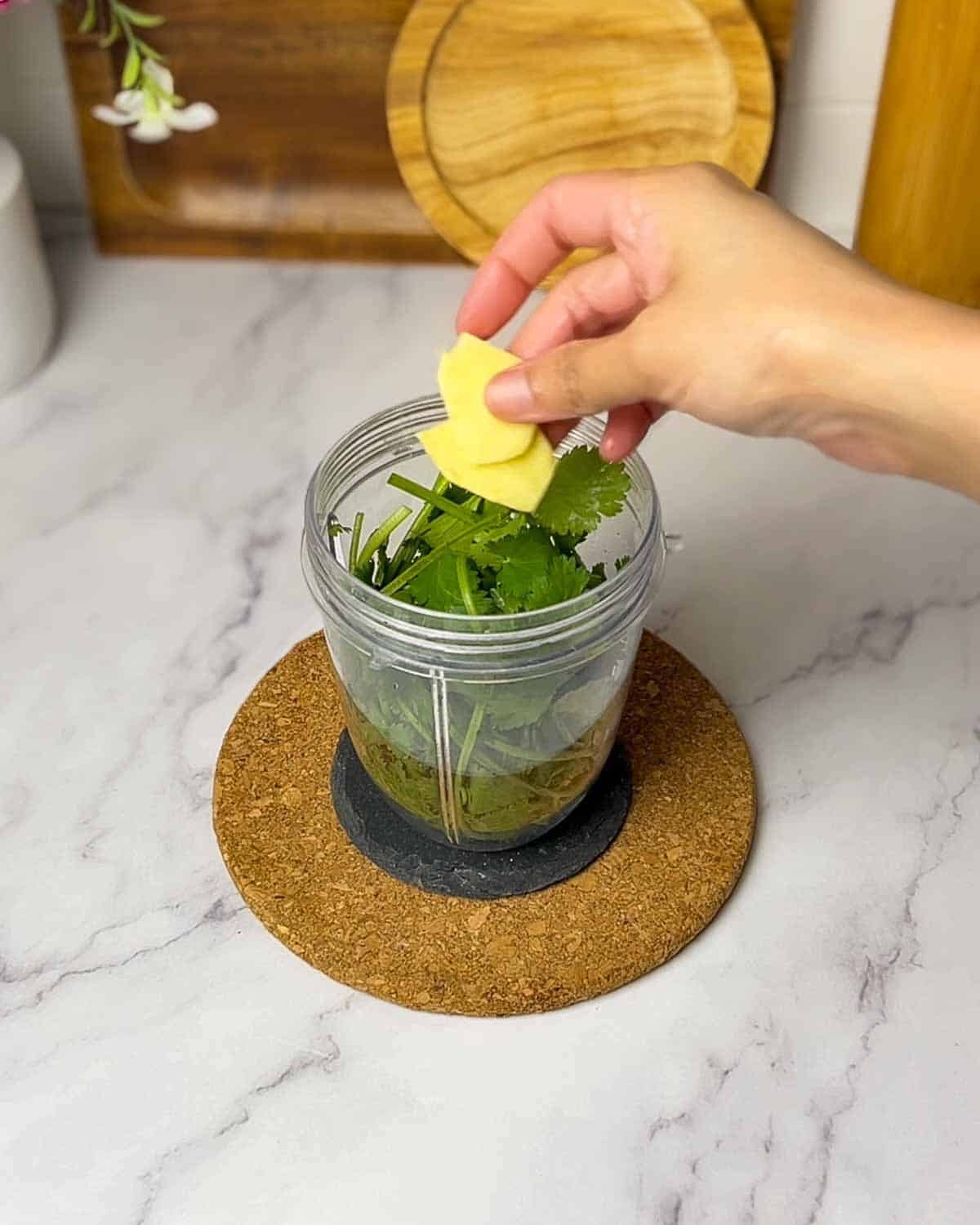
Soak tamarind in just enough hot water to cover it completely. Once it softens, use clean or gloved hands to remove any seeds you find. Now add cilantro, cumin seeds, black salt, regular salt and cooking oil to the jar of a high-speed blender.
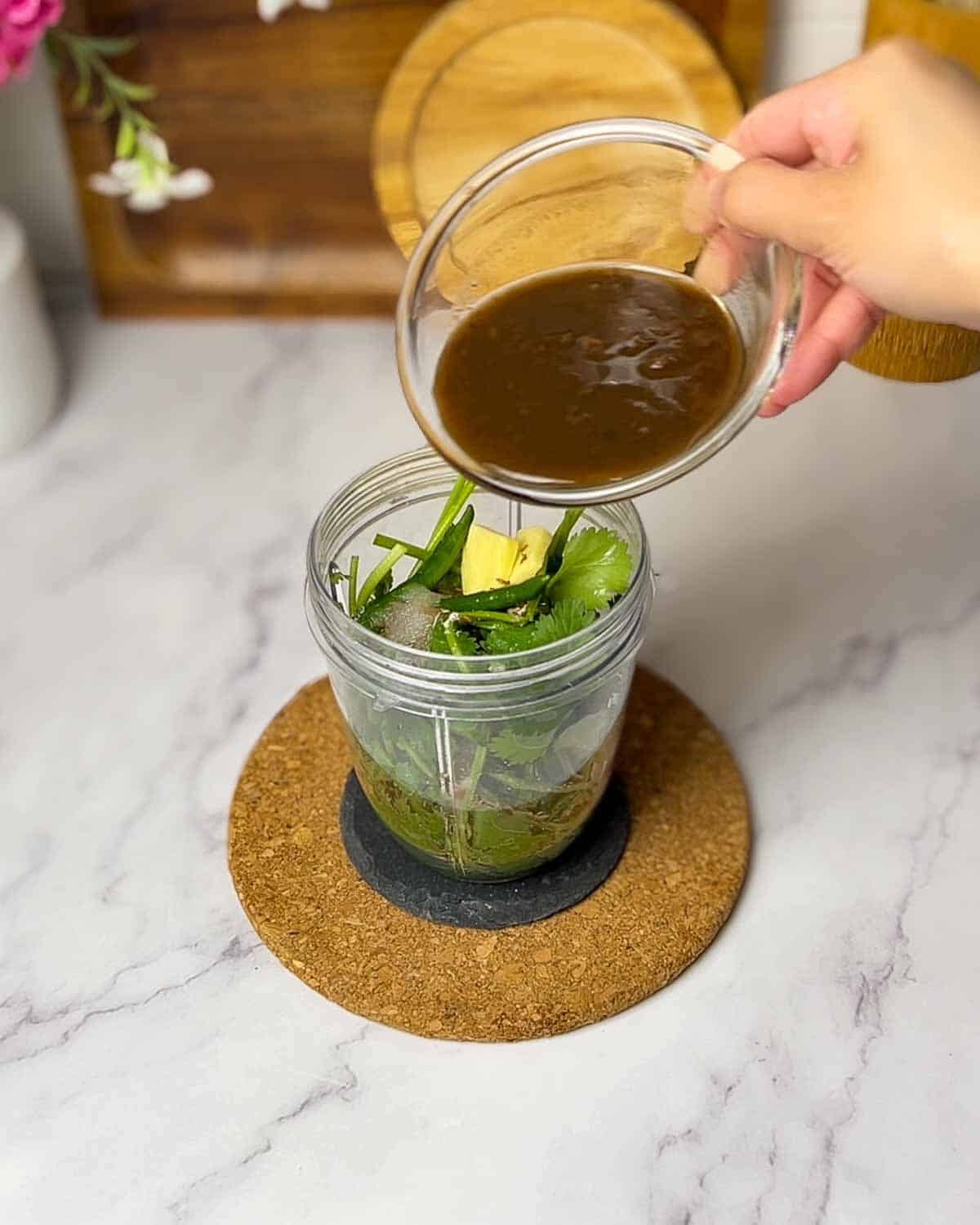
Add the tamarind (once it has cooled to room temperature) along with its liquid, plus the ice cubes, water, sugar, chilies, and ginger.
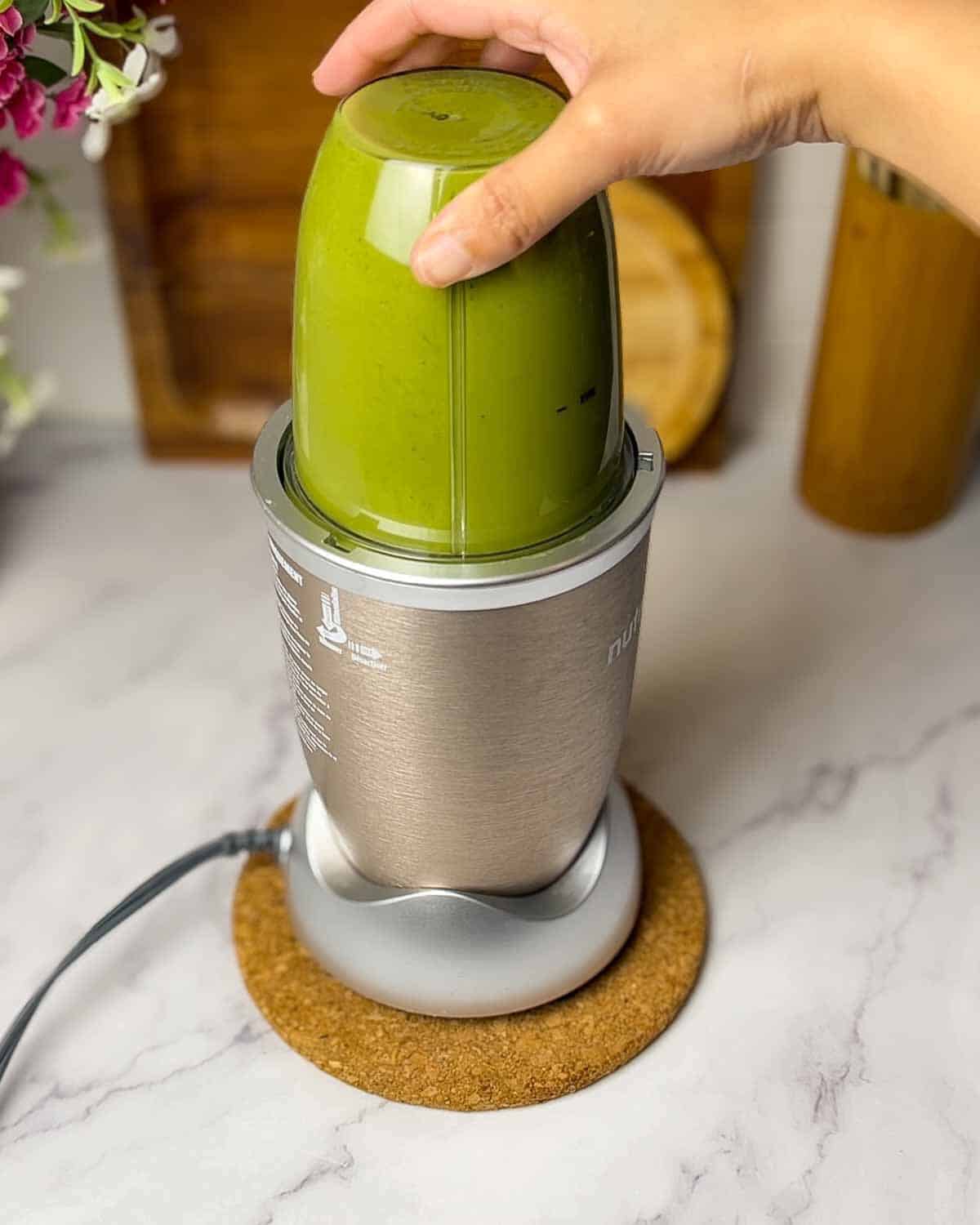
Blend everything until smooth, using short bursts. Taste and adjust the chutney as you like. If you want it thinner, add some cold water. If you want it more spicy, blend in more green chilies and feel free to adjust the salt to taste.
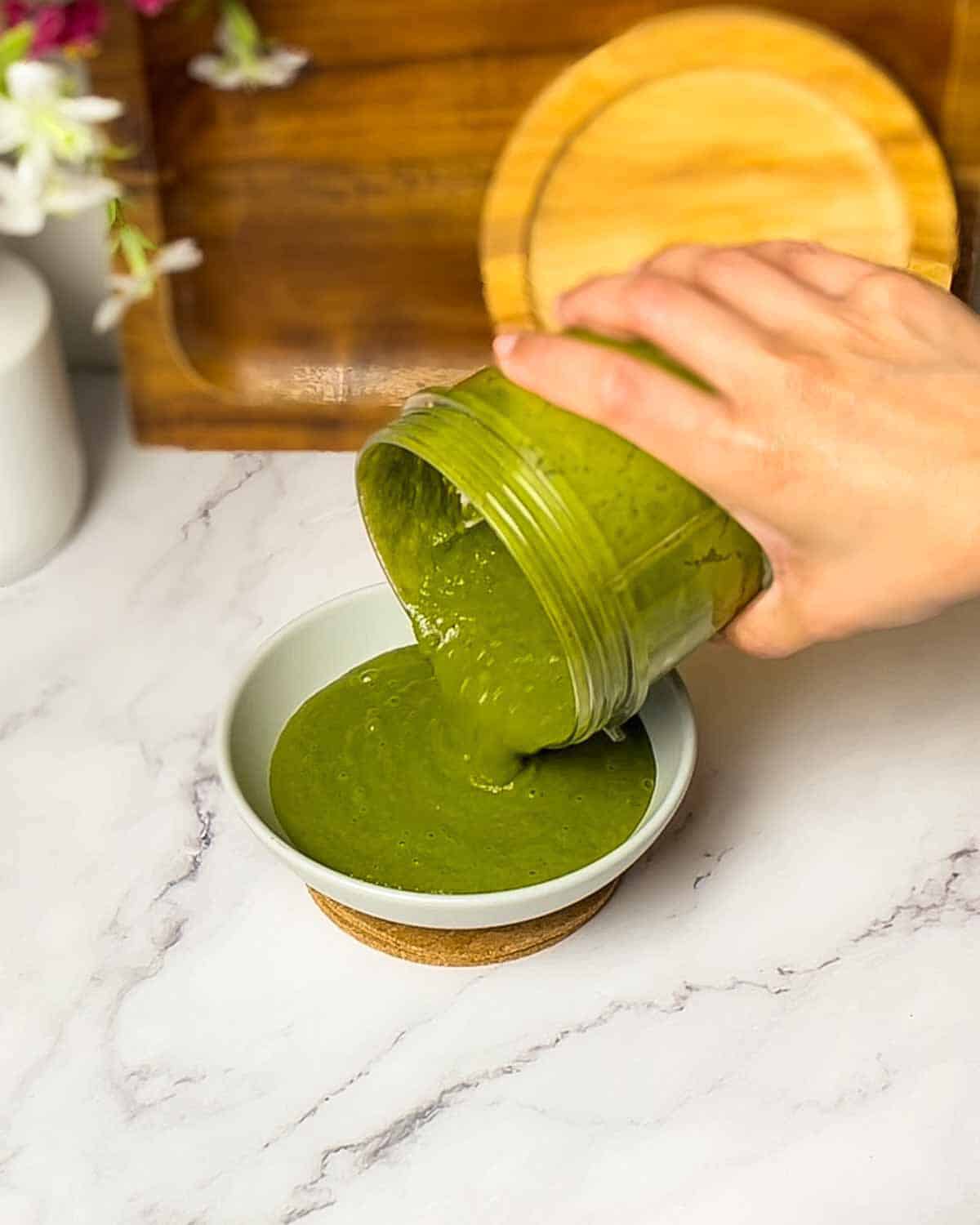
Transfer the imli chutney to an airtight container, and use as needed. I also freeze it sometimes in ice cube trays for later use.
Top tips
- Instead of regular tamarind, you can use pre-made tamarind paste or concentrate (not the sauce) that you’ll find in Indian and Asian grocery stores. The thing is, the taste and consistency of these pastes can vary depending on the brand and where it’s made. So, yeah, it’s super convenient, but your chutney might not taste exactly like mine. That said, it’ll still be delicious.
- This recipe is very customizable. If you want a thinner consistency, just add water (but make sure it's chilled so the green color stays vibrant). If you want it spicier, toss in more green chilies, and adjust the salt to your liking.
- Tamarind-based sauces are usually pretty bold, so a little goes a long way. Use as much as you want from the batch, and then quickly store the rest in an airtight container in the fridge.
This chutney is one of my all-time favorite condiments, and I’m sure it’ll become one of yours too. And if you do make it, I’d love to hear from you in the comments down below. Don't forget to leave a star rating.
Happy cooking – Nelo
Hariyali Imli Chutney (Green Tamarind Chutney)
Ingredients
- 2 tablespoons chunk of imli - aka tamarind (Note C)
- 30-35 sprigs cilantro - aka coriander, stems and all (Note A)
- 1 teaspoon whole cumin seeds - aka safaid zeera
- ¼ teaspoon black salt - aka kala namak
- ¼ teaspoon regular salt
- 1 tablespoon cooking oil
- 2 tablespoons water - cold
- 1.5 teaspoons sugar
- 1-2 small green chilies - (Note B), adjust to taste ⓘ
- 1 inch piece of ginger - peeled, cut into a few pieces for easy blending
- 8-10 ice cubes - secret to keeping the chutney green
Instructions
- Cut off about a 2-tablespoon chunk of tamarind from the block and soak it in just enough hot water to cover it completely.
- Once it softens, use clean or gloved hands to press and break it apart, and remove any seeds you find. Some tamarind packs labeled “seedless” can still have seeds hiding in them. The skin and other bits of pulp are fine to leave in as they’ll help thicken the texture. Don't discard the water used for soaking.
- Next, add all the ingredients, along with the ice, the seed-free tamarind and all its liquid, into the jar of a high-speed blender. Make sure the tamarind has cooled to room temperature before you add it in. Blend everything until smooth, using short bursts (see Note D below)
- Transfer the imli chutney to an airtight container, and use as needed. I also freeze it sometimes in ice cube trays for later use.

Leave a Comment