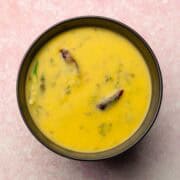
Moong Dal Recipe (Yellow Lentil Curry)
Blog: cookingwithnelo.com
Servings: 4
Ingredients
- 1 cup uncooked yellow moong dal - rinsed 3 to 4 times, then drained (Note A)
- ¼ teaspoon turmeric powder - aka haldi
- 3 tablespoons pure desi ghee - divided (Note B)
- 8 cloves garlic - peeled and thinly sliced
- 3 small green chilies - chopped, halved or sliced, I use Thai chilies (Note C), adjust to taste ⓘ
- 2 whole dried long red chilies - adjust to taste ⓘ
- ½ teaspoon mustard seeds - aka rai dana, black/dark brown kind, not yellow
- 1 teaspoon cumin seeds - sabut zeera
- 12 fresh curry leaves - aka curry patta
- 1 teaspoon grated ginger - or homemade ginger paste (Note D)
- 1.5 teaspoons regular white sugar - to balance the flavors
- ¾ teaspoon salt - regular white salt
- 4 tablespoons chopped cilantro - aka coriander/hara dhaniya
- 2 tablespoons lemon juice - fresh, not bottled
Instructions
- Have all ingredients prepped and ready before you start cooking. You can use the checkboxes next to each ingredient to track your prep.
- Add the rinsed and drained moong dal to an Instant Pot/electric pressure cooker or stovetop pressure cooker (no soaking needed). Stir in the turmeric, 3 cups water, and 1 tablespoon ghee.
- Lock the lid securely into place. Make sure the steam release valve is set to the sealing position. If using an electric pressure cooker/Instant Pot, select the High Pressure setting and cook for 15 minutes. When using a stovetop pressure cooker, heat until the cooker reaches full pressure. Lower the heat just enough to maintain pressure, then begin timing 15 minutes.
- Once cooking is complete, allow the pressure to release naturally for 10 minutes, then carefully do a quick release to release any remaining pressure (always follow the safety instructions of your pressure cooker). Open the lid cautiously to avoid steam burns.
- Stir the dal until it reaches a smooth, paste-like consistency. Then add more water to reach your desired consistency. I usually pour in 2.5 cups at this stage. But start with less, and adjust as you like. The dal thickens as it sits, just something to keep in mind.
- Heat the remaining 2 tablespoons of ghee in a small pan over medium heat. Add the sliced garlic and sauté for about 2 minutes.
- Then stir in the chopped green chilies and dried red chilies. I break dried chilies in half for more spice, but you can leave them whole. Cook just until the garlic begins to take on a very light golden color. Don’t let it brown.
- Add the mustard seeds, cumin seeds, and curry leaves, and cook for about 30 seconds. Turn off the heat, then stir in the grated ginger and let the pan sit on the same burner for another 30 seconds to allow the flavors to meld.
- Pour this tempered mixture over the cooked dal and stir to combine. Turn on the heat or sauté function of your Instant Pot on low setting. Mix in the sugar and salt. Keep in mind, the more water you've added, the more salt you may need. Taste and adjust, but do so gradually.
- Finally, mix in the cilantro and lemon juice. Turn off the heat. At this point, I like to cover the dal and let it rest for 10 minutes so the flavors get better infused, though it’s perfectly fine to serve right away.
- Serve with roti, chapati, naan, or steamed basmati rice. I also love pairing it with kachumber (diced onion, tomato, cilantro, lime, and salt) and papad or pappadums on the side. If you try this recipe, I'd love to hear how it turned out in your kitchen. Leave your rating and comment below.
Notes
Note A: Moong Dal – Don’t confuse this dal with the moong dal that looks like tiny little green beads. That variety is unhusked and unsplit. Other names for this yellow kind include split moong dal, split mung bean/lentil, dhuli moong dal, split yellow lentils, moong dhoya dal.
Note B: Ghee – Ghee is non-negotiable here. Oil won't give the same taste. Use asli desi ghee, not the non-dairy kind that's made with vegetable oil.
Note C: Green Chilies – The amount of chilies mentioned won't make your dal too spicy. I usually add more, and I use Thai or bird’s-eye chilies. If you’re working with a milder variety, you may want to use a few more.
Note D: Ginger – Frozen ginger grates much more easily than fresh. I use a microplane to grate. Feel free to use homemade ginger paste instead of grated ginger.