

With fall-apart meat and ridiculously good taste, this beef karahi begs to be scooped up with some warm naan. The flavor from tomatoes is front and center, obviously, which is why you need good, ripe ones. But if yours aren’t, I’ve got a fix that'll get you 'almost' there.
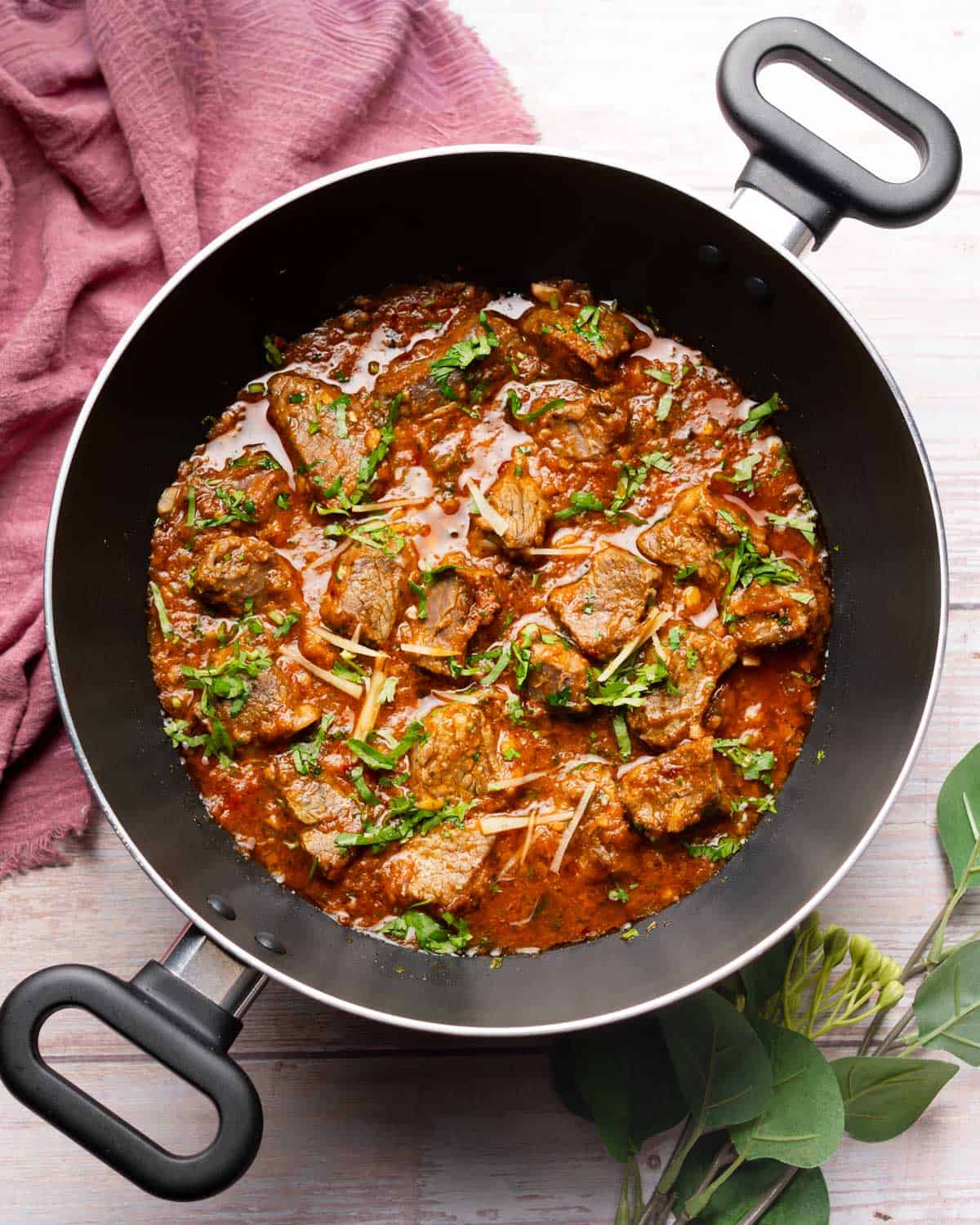
I like my chicken karahis reduced down to a very thick consistency. The idea is to have a clingy sauce that holds on to the meat and delivers that signature concentrated flavor in each bite.
But when it comes to beef, mutton, or lamb karahis, I tend to go a bit generous with the sauciness. And a bit heavier on flavoring ingredients to adjust for that extra liquid. It helps stretch the meal further, especially if you've got a big family or crowd to feed.
At high-altitude locations, like where I live, getting meat tender enough to fall apart on the stovetop takes forever. That’s why I always use an Instant Pot for my beef recipes, including this one. That said, if altitude weren’t an issue, I’d still use pressure cooking for quick and consistent results.
This isn't exactly a 30-minute karahi recipe, because the beef takes more time to cook than chicken, but the process is fairly easy to follow.
First, I cook the tomatoes with a little water, so their skin comes off easily. Then in a wok/wide pan, I saute some everyday aromatics, add in tomatoes with a few simple spices, and let the liquid reduce down. Pressure-cooked beef goes in, a few finishing ingredients, and Bob's your uncle.
If the melt-in-your-mouth beef in this karahi gets you craving more such beefy recipes, try my namkeen gosht and bhuna gosht recipes next. You'll be glad you did.
Pre-cooking notes and tips
- The fix I mentioned about earlier for when your tomatoes aren’t fully ripe is to add tomato paste. Its concentrated flavor peps up the overall taste. When tomatoes aren't in season, I usually use about one tablespoon of paste per pound of meat. Don’t reduce the amount of fresh tomatoes, though. You still need enough to end up with the right amount of sauce.
- Fresh ginger and garlic are a must. Store-bought pastes will not bring out the same, restaurant kind of taste.
- This karahi recipe is meant to have a medium level of heat, but chilies can be pretty unpredictable. So think of the amounts listed here as a reference point, and feel free to adjust based on how spicy your chilies are and what you prefer.
- You can swap in lime juice for lemon, just use a bit less. For every tablespoon of lemon juice, go with about ¾ tablespoon of lime.
- I only use Roma tomatoes for all my desi cooking. Varieties like beefsteak can sometimes be a bit sweeter and might not have the acidity you need for the karahi to come out tasting right.
- If you can find chubby Pakistani chilies (moti mirch), use them for the most authentic taste. If not, use any fresh chilies you like or have on hand. Just be aware of their spice level to avoid surprises. I usually go with Thai or bird’s-eye chilies.
Serving ideas
This beef karahi pairs best with flatbreads. Naan, roti (romali roti is great too), paratha, tortillas, whichever one you prefer. As long as they taste neutral and don't overpower the dish's flavors. I wouldn’t serve karahi with rice, there’s not enough sauce.
You can do kachumber and/or raita on the side, but the dish shines best just on its own. Lemon wedges, julienned ginger and finely chopped chilies are good optional toppings to put out on the table, in case someone wants extra tang or spice.
And that's a wrap!
This karahi is share-worthy, droll-worthy, and absolutely praise-worthy. And so I hope you'll give it a try. If you do, comment below to let me know how it turned out in your kitchen.
Happy cooking ~ Nelo
Beef Karahi (Karahi Gosht)
Ingredients
- 1 pound (500 g) boneless beef - cut into 1.5 to 2 inch pieces (Note A)
- 1 teaspoon salt - divided (white/table salt)
- 4 (400 g) tomatoes - I prefer Roma tomatoes
- 6 tablespoons cooking oil - divided
- 4 cloves garlic - finely chopped
- 3 small green chilies - finely chopped (Note B), adjust to taste ⓘ
- 1.5 inch piece of ginger - finely julienned, divided
- 1.5 teaspoons cumin powder - aka zeera apowder
- ½ teaspoon coriander powder - aka dhaniya powder
- ¾ teaspoon crushed red pepper flakes - aka kutti lal mirch, adjust to taste ⓘ
- 1 tablespoon kasuri methi - aka dried fenugreek leaves
- 1 tablespoon lemon juice - fresh
- 2 tablespoon chopped cilantro - aka coriander/dhaniya
Instructions
- Add beef, ½ teaspoon salt, and ⅓ cup water to the Instant Pot. Mix well, seal the lid, set to Manual (High Pressure), and cook for 27 minutes. Turn it off, let the pressure release naturally for 10 minutes, then carefully use the valve for a quick release of remaining pressure. Remove the beef and save the cooking liquid.
- Meanwhile, cut each tomato in half. Trim off the stem ends so it’s easier to remove the skins later.
- In a saucepan/pot, preferably non-stick, add 2 tablespoons of cooking oil, ⅓ cup water, and the halved tomatoes. Turn the heat on to low, cover, cook until the skins start to come off.
- Use tongs to remove the skins. If they don’t come off easily or the flesh comes off with them, cook a bit longer. Remove from the heat, set the tomatoes and their juices aside.
- Heat the remaining 4 tablespoons of oil over medium heat in a wok/pan (should be a wide, big one). Add garlic, green chilies and two-thirds of the total quantity of julienned ginger. Sauté for 1 to 2 minutes.
- Add the peeled tomatoes along with their juices and the beef’s cooking liquid. Also add cumin powder, coriander powder, and crushed red pepper flakes (see Note C below, if your tomatoes aren't perfectly ripe). Cook until the tomatoes break down into a thick sauce. Mash them as you go. Reduce to a thick sauce.
- Add cooked beef, remaining quantity of ginger, ½ teaspoon salt and kasuri methi. Mix and bring to a simmer. Then cover, reduce the heat to low, or just enough to maintain a very gentle simmer. Cook until you see some of the oil floating to the sides or on top. Stir occasionally.
- Add lemon juice, chopped cilantro (and some extra chopped chillies if you prefer more spice). Mix well, turn off the heat, cover the wok/pan again, and let your karahi rest on the same burner for 10 minutes before serving. Enjoy with hot naan or roti.



Leave a Comment