

Chapli kababs are my favorite kind of meat patties. Crusty surface, soft yet textured center, these kababs are a classic street food in Pakistan and Afghanistan for good reason. With 2 pounds of ground/minced meat, this recipe can feed many mouths. Plus, it's freezer-friendly!
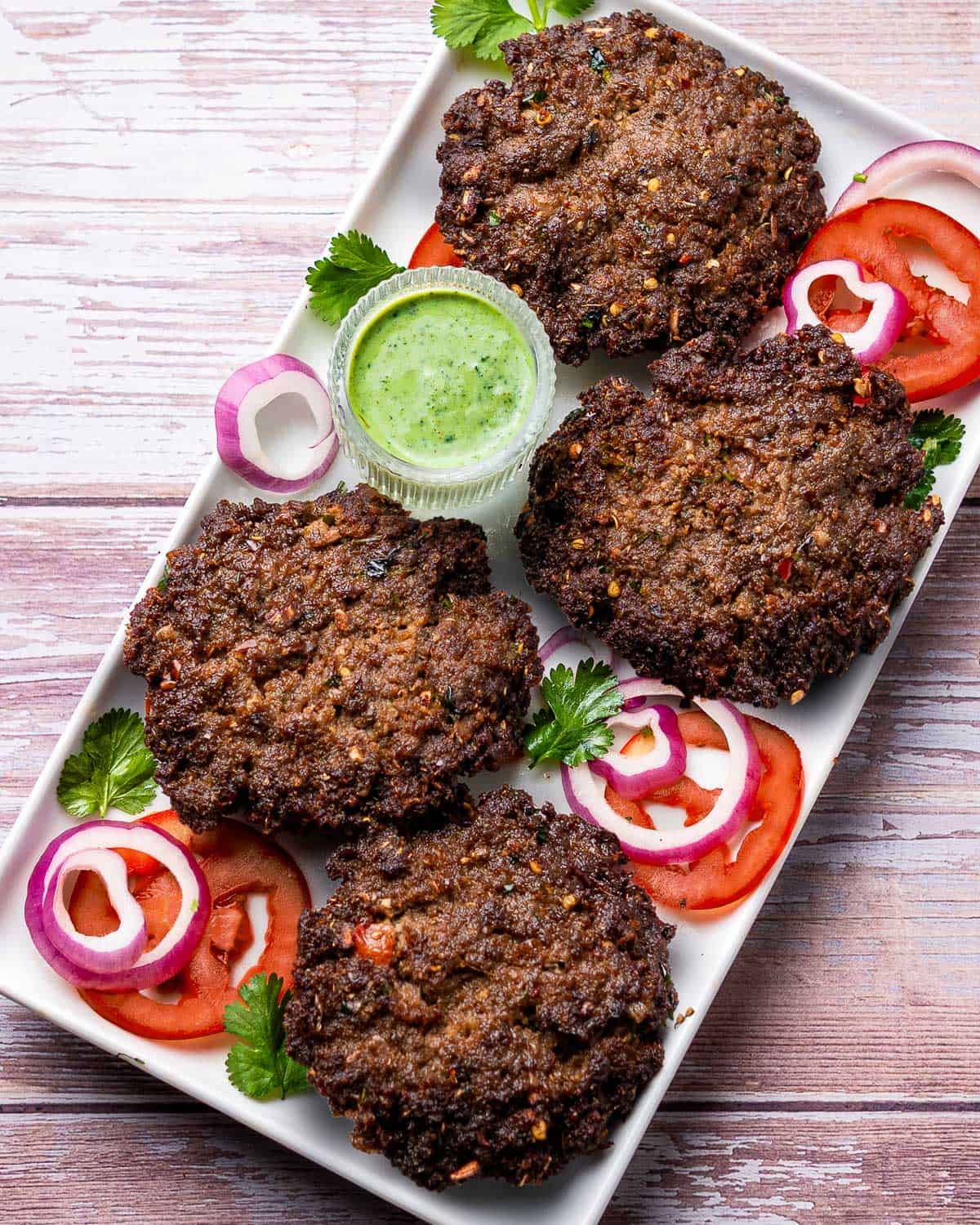
Chapli kabab ingredients vary widely across recipes, but you’ll usually see staples like meat (duh!), onion, tomatoes, coriander seeds, and flour. Beyond that, it comes down to regional influences, personal touches, what have you. So who knows what even counts as an authentic version?
But what I can tell you for sure is that my take on this recipe makes kababs that have received enthusiastic approval at several dawats and parties. It’s a version I landed on after seven rounds of testing and tweaking.
You'll never have any complaints about the taste, but getting the kabab mixture to the right consistency may take a tiny bit of judgment on your part.
You only want to add enough flour to bind everything together so the patties hold up in hot oil and don't fall apart. But you don’t want so much that it turns the flavor dull and bready.
All that to say, think of the amount of corn flour I've mentioned as a reference point. You may need to make adjustments depending on how your mixture comes together.
You’ll see some recipes call for raw eggs for 'easier' binding, but I don’t use them in mine. When I created a version that included them, I didn't like how the taste changed. And frankly, I don't see the need. The flour does a pretty good job of holding everything together.
Pre-cooking notes and tips
- You can replace pomegranate seeds with powder, but cut the quantity in half. You won’t get that classic chapli kebab texture, though, that slight bite from the seeds.
- Ginger powder is essential and cannot be replaced by adding more fresh ginger. An Afghan friend once shared that they add it to their recipe, so I tried, and found that it makes quite a nice difference.
- It’s important to remove the seeds and the soft pulp inside the tomatoes before you chop/blend them, or your kabab mixture will have more moisture. Meaning you’ll need to add more flour.
- Another key thing for getting the moisture right is chopping the onions really fine so you can easily squeeze out all the liquid. I use a food processor or chopper (not a blender), then transfer the onions to a cheesecloth or any clean muslin cloth. From there, I squeeze out as much liquid as I can. With 2 medium onions, what I'm usually left with is about 1.25 to 1.5 cups of onion.
- The amount of spicy ingredients like red chili powder, chili flakes, and green chilies might seem a bit much, but this recipe makes many kebabs. Individually, your kababs won't taste super spicy but will just have the right amount of kick for a well-rounded flavor. That said, you can always adjust quantities up or down depending on your preference and the level of heat your ingredients pack. Your green chillies, for example, might be more or less spicy than mine.
- In some countries, like in Pakistan, what’s sold as corn flour is actually corn starch. But for this recipe, you'll need makai ka atta (aka maize flour). If you can’t find it, use besan (aka gram flour) or whole wheat flour. When using these substitutes, start with half the mentioned amount of corn flour. Then mix in more, if needed, very gradually, until the mixture holds well enough to shape into kebabs.
- Aim to shape the patties into rounds, but they don't have to be perfect or uniform. Press them nice and thin, just not so much that they start to break apart.
- Dhabas and restaurants use frying pans that are way bigger and wider than what you’d typically use at home, which is why they can make much bigger kababs. At home, you won’t be able to match that size. The kababs also shrink as they fry, so they end up even smaller. Just setting expectations.
- Chapli kebabs are traditionally deep-fried, but can also be pan-fried if you want to use less oil. The surface texture and crunch will not be the same, but the taste will still be good. Samad and I also love to grill them outdoors in the summer. Some people make them in an air fryer, but I haven't tried that method.
- To freeze the kababs, shape them into thin patties as you normally would, arrange them in a single layer on a sheet pan or in a large freezer-safe container. Make sure they don’t overlap. Place a sheet of plastic wrap or parchment paper on top, then add a second layer of kababs. Continue this way and finish with a final sheet on top. Freeze flat until they solidify, then transfer to a freezer-safe bag. These can go straight into the oil and be fried over medium heat.
Serving ideas
Chapli kababs are best enjoyed with naan or rotis. I like to serve raita and/or imli chutney on the side. And sometimes kachumber or just sliced onions and tomatoes. Oh and always some lemon wedges for a fresh squeeze of juice on top.
A Nice Twist
Sometimes I give the uncooked meat mixture a quick smoke using the dhungar technique. It changes the flavor quite a bit, so it’s no longer really a traditional chapli kabab, but it does come out really good.
If you want to give it a try, put the uncooked meat mixture into a deep pan/pot/container that can be covered tightly. Make a small well in the center and set a small metal or makeshift foil bowl in it. Heat a piece of charcoal until it’s red, then place it in the bowl.
Drizzle about a teaspoon of cooking oil over the hot coal and immediately cover the container so the smoke gets trapped inside. Let it sit for just two minutes. Any longer and the smoke will overpower all the flavors. After that, fold through the kabab mixture for even smokiness, then form the kababs as usual.
And that's a wrap!
I just put a big batch of chapli kababs in the freezer. They’re meant to be backup for when Samad and I don’t feel like cooking. But if experience is anything to go by, they won’t last long enough to actually be “backup”. Hope you give this recipe a try!
Happy cooking ~ Nelo
Chapli Kabab
Ingredients
Blended mix
- 1 medium (100 g) tomato - seeds & soft pulp removed
- 6 cloves garlic - peeled
- 1 inch piece of ginger - peeled
- 4 tablespoons lemon juice - fresh
Crushed spices
- 3 tablespoons coriander seeds - aka sabut dhaniya
- 2.5 tablespoons dried pomegranate seeds - aka sabut anardana
- ½ teaspoon carom seeds - aka ajwain
Other spices
- 2 teaspoons cumin powder - aka zeera powder
- 1.5 teaspoons ginger powder - aka saunth
- 1 tablespoon crushed red pepper flakes - aka chilli flakes / kutti lal mirch, adjust to taste ⓘ
- 1.5 teaspoons garam masala powder
- 2 teaspoons chaat masala
- 3 teaspoons regular white salt - aka table salt
- 1 tablespoon red chilli powder - adjust to taste, adjust to taste ⓘ
Other ingredients
- 2 medium (200 g) onions - peeled
- 30 sprigs cilantro - aka coriander/dhaniya, very finely chopped
- 8 small green chillies - very finely chopped (Note A), adjust to taste ⓘ
- 2 pounds (900 g) ground beef - aka beef mince/keema, 20% fat
- 1.25 cups (90 g) corn flour - aka maize flour / makkai ka ata, not cornstarch (see Note B for subs)
- 1 medium (100 g) tomato - seeds & soft pulp removed, very finely chopped, optional
- cooking oil for frying - or beef tallow, ghee, or their combo
Instructions
- Puree everything listed under "blended mix" in a blender. Don't add water.
- Coarsely crush the ingredients listed under “crushed spices” (spice/coffee grinder or mortar & pestle). Don’t let them turn powdery, they add texture.
- In a large bowl, add the blended mix + crushed spices + ingredients mentioned under “other spices.”
- Chop onions super finely (I use food processor). Squeeze out all their liquid as best you can using a cheesecloth or clean hands. Put the onion into the same large bowl along with chopped cilantro and green chillies. Mix well.
- Now add ground beef. Using gloved hands, knead the kabab mixture for 8 to 10 minutes or until the meat gets stringy and clingy.
- Add corn/maize flour. Start with 1.25 cups of flour, mix well, then add ¼ cup at a time until you get the right consistency to form patties that hold their shape.
- Cover, marinate 2 hrs or up to overnight in fridge. When ready to cook, divide into 18 portions. Don’t flatten them into kababs yet.
- Heat oil in a heavy-bottomed or cast iron pan over medium-high heat to ~350°F/175°C. Use just enough oil so patties get submerged when frying.
- Take one portion of kabab, optionally, mix in 2 to 3 tiny bits of finely chopped tomato. Flatten into a kabab using oiled hands. See Note C below.
- Carefully place into the oil, and lower the heat to medium. Fry 2 to 2.5 mins per side. Watch closely, frying time may vary slightly. Adjust heat as needed. Target is a crisp crust and a center that's fully cooked to 160°F/71°C. Repeat with remaining patties.
- Transfer to paper towel–lined plate. Serve with lemon wedges + chutney or raita of choice. Enjoy with hot naan or roti.
Leave a Comment