

This chicken shorba recipe was given to me by my very dear friend Hiba and is one of my favorite comfort foods. A pick-me-up for when I'm under the weather. Or need to unwind after a long day. Or just want something light yet full of flavor.
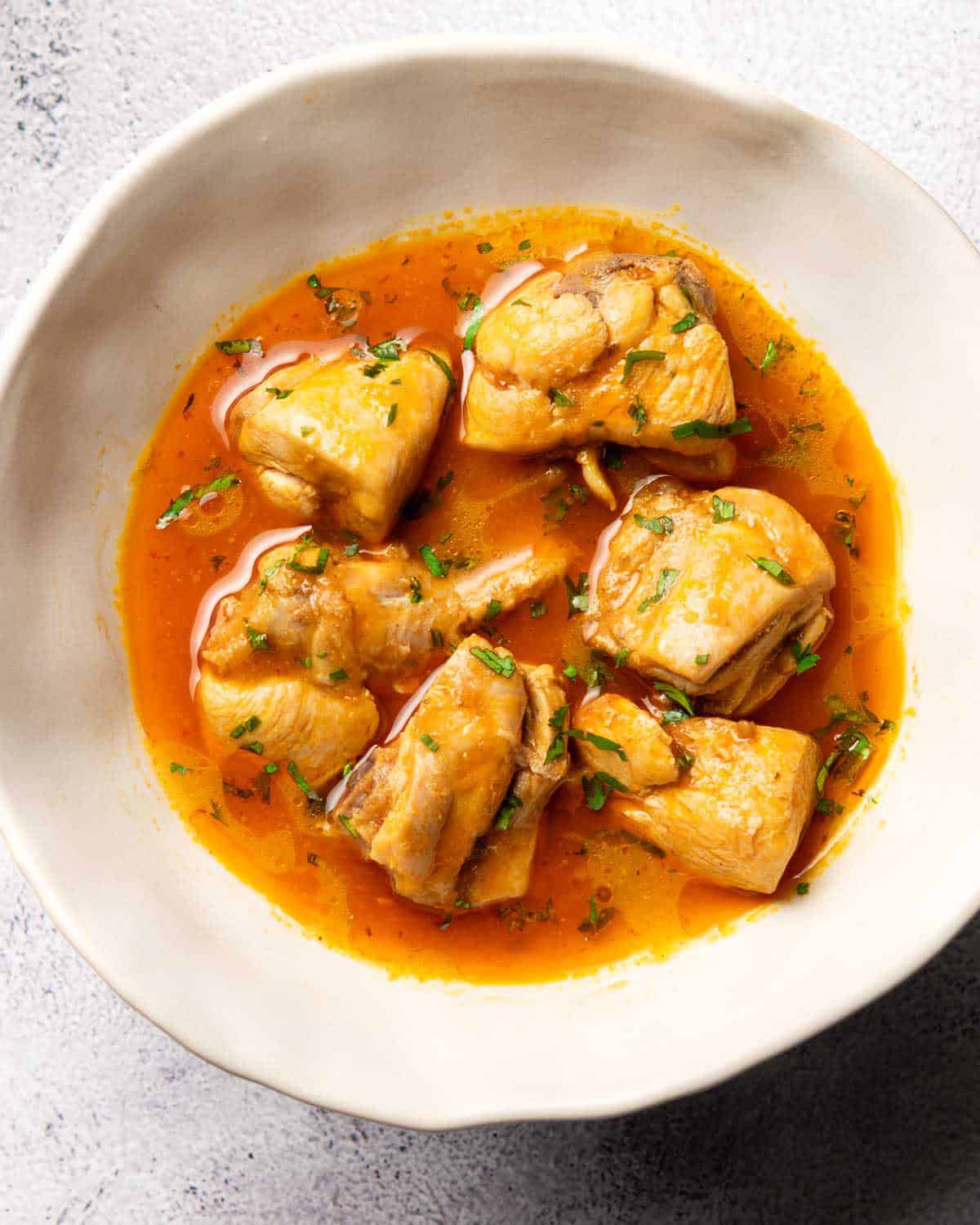
Hiba had this recipe handed down from her Mummy Jan, her late grandma, who I've been told was incredibly kind and loving. And I’m so happy that through this dish, her grandmother’s care can reach you too now.
The first time I had this shorba, or any shorba for that matter, was when she brought it over some four years ago while I wasn't feeling well. Bless her heart for always being so thoughtful.
Shorba has a brothier, lighter consistency compared to your typical chicken salan/curry, though the two words are sometimes used interchangeably. And so when I saw it the first time, it didn't exactly make me jump off my couch with excitement.
It had a soupy, unassuming appearance, though totally apt for the moment. But then I had it with some rice. And boy oh boy was I instantly reminded of why you shouldn't judge a book by its cover. I texted her for the recipe before I even finished my meal, and ever since, it's been a staple in my rotation.
Although I’ve made a tweak or two to the recipe to add a bit of spice, the process is still the same and still pretty simple. First, I boil a few veggies and blend them. Then I sauté the chicken with a few spices, pour in the pureed veggies, and let everything simmer gently until the chicken is cooked through.
For the little effort it requires, the taste payoff is amazing. This one is a treat for the palate, whether you have it with rice or with bread, and is therapy for a foodie's soul. A must-must-try.
Pre-cooking notes and tips
- Tomatoes can make or break this dish. They bring both flavor and color. If you can't find good, ripe ones, add a tablespoon of tomato paste (not sauce) to boost the flavor. I use Roma tomatoes as they have the right balance of acidity.
- Hiba mentioned that red onions work best, and I agree that they give better flavor. But I’ve also used yellow onions a few times, and the shorba still turned out amazing.
- Fresh garlic is essential. Boiling makes it mellow-sweet, and brings out a flavor that garlic paste doesn't replicate.
- The original recipe doesn’t include green chilies or red chili powder, and it tastes fabulous without them. I, however, enjoy a little kick. Feel free to omit them.
- Speaking of chilies, I use Thai green chilies. You can swap in other kinds, and adjust the quantity to your taste. Just don't use thick-walled ones like jalapenos or serranos.
- If you don’t have an immersion blender, ensure the vegetables and cooking liquid have cooled completely before using a standard blender. Most countertop models, especially those with plastic jars, aren’t built to handle high heat.
- If you're reducing the shorba to get a thicker consistency, reduce the amount of chilies and salt too, or they will taste intense.
Serving ideas
My favorite way of enjoying this chicken shorba (aka murgh shorba) is with rice. I also love to dunk in a fresh, crusty bread like baguette. Chapati, roti, and naan all work great.
And that's a wrap!
This recipe is special for me. It reminds me of Hiba’s kind heart and, in turn, of all the blessings, care, and love that surround me. If you give it a try, I’d love to hear from you in the comments below.
Happy cooking - Nelo
Chicken Shorba (Soupy Chicken Curry)
Ingredients
- 2 medium (200 g) tomatoes - cut into halves lengthwise (Note A)
- 1 medium (110 g) onion - peeled and cut into 4 quarters
- 6 cloves garlic - peeled
- 2 small whole green chilies - pull out the stems. I use Thai chillies, adjust to taste ⓘ
- ⅓ cup cooking oil - or ghee
- 2 whole black cardamoms - aka bari elaichi
- ½ inch piece of cinnamon stick - aka dalchini
- 6 whole black peppercorns - aka sabut kali mirch
- 2 cloves - aka laung
- 1 pound (500 g) bone-in chicken pieces - skinless, curry-cut
- 1 teaspoon salt - regular white/table salt, adjust to taste
- ⅛ teaspoon turmeric powder - aka haldi
- ¼ teaspoon red chili powder - adjust to taste ⓘ
- 2 tablespoons finely chopped cilantro - aka coriander/dhaniya
- 1 tablespoon lemon juice - fresh
Instructions
- Have all ingredients prepped and ready before you start cooking. You can use the checkboxes next to each ingredient to track your prep.
- Place tomatoes, onion, garlic cloves and green chilies in a pot. Add 1 cup water.
- Cover and cook 10 to 15 minutes over medium heat, or until the tomatoes are soft and their skins/peels loosen. Use tongs to remove and discard skins. If they resist or if a lot of pulp comes away with them, cook a few more minutes.
- Blend these veggies, along with all the liquid, into a smooth puree. Set aside.
- Heat oil/ghee in another pot over medium heat. Add black cardamoms, cinnamon, black peppercorns and cloves. Sauté 1 minute.
- Add chicken pieces, along with salt, turmeric, and red chili powder. Stir for 4 to 5 minutes or until the chicken changes color all over and is no longer pink.
- Add the prepared vegetable puree, mix well and cover the pot. When it starts to simmer, reduce the heat to medium-low and cook covered for 5 to 6 minutes. Stir occasionally.
- Then add ½ cup water (preferably hot), give a quick stir and cover again. Increase the heat, bring to a simmer, then turn it down to low, or just enough to maintain a very gentle simmer. Cook for 10 to 15 minutes or until the chicken is cooked through and the oil starts to separate. Stir occasionally.
- Turn off the heat, mix in chopped cilantro (coriander) and lemon juice. Cover the pot again, and let the shorba rest for 5 minutes so the flavors meld together. Serve hot with rice, roti or naan. If you try this recipe, I'd love to hear how it turned out in your kitchen. Leave your rating and comment below.


Leave a Comment