

Any time I make a dish that could be paired with either bread or rice, Samad and I almost always go with the latter. For us, white basmati rice is as staple as it gets.
To make sure it comes out perfectly cooked every time, I use a method I learned from my mother-in-law. And that’s the recipe I’m sharing with you today.
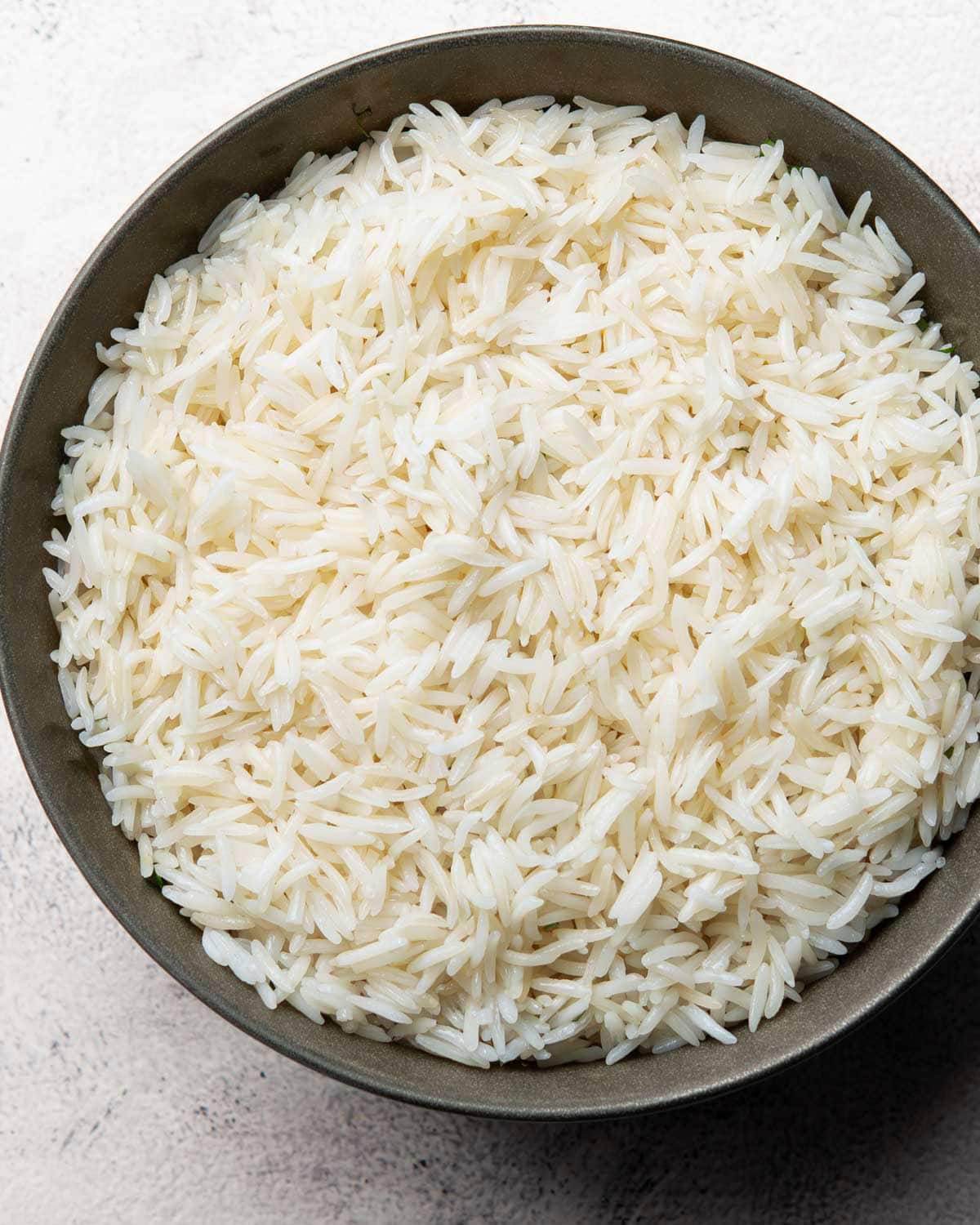
Plenty of people prefer to use a rice cooker, and for good reason. It's a great appliance to have if you’ve got the counter or storage space. But you don’t really need one to make excellent, restaurant-quality rice. Since most of my stovetop process (about two-thirds at least) is hands-off, the convenience advantage of a dedicated appliance doesn't seem all that big to me.
To get consistently good results, remembering the rice-to-water ratio is key. Just as important, though, is refraining from lifting the lid during the steaming and resting steps. You’ve got to trust the process.
This one-pot recipe doesn’t require any chef-level skills. You add oil and salt to the water and bring it to a boil. Then mix in the rice and reduce the liquid over high heat. When that’s done, set a 10-minute timer and let it steam. Turn off the heat, set another 10-minute timer, and let it rest.
Friends and family who use this method say it’s the best they’ve ever tried. The grains always come out fluffy yet separate, never mushy. And I’m excited to share the same method with you now.
Pre-cooking notes and tips
- Basmati rice and basmati sella rice are not the same. The latter is a parboiled variety, often used for pulao and biryanis. My cooking method works for sella as well, but you'll need to soak the rice for a minimum of 2 hours. And both the steaming and resting times will be 15 minutes instead of 10.
- I almost always buy rice that's labeled extra-long grain, as it comes out fluffier. But that's just a personal preference. Any white basmati will work.
- Feel free to use ghee or butter instead of oil for a richer taste.
- I usually plan ahead so I can let the rice soak for about half an hour, but life happens, and sometimes I just don’t get around to it. The rice still cooks fine, doesn't come out mushy or undercooked, but isn't top-notch either. When I can't soak, I just let it rest for an extra 10 minutes at the end of cooking. One thing I never skip, though, is rinsing the rice. You've got to wash off excess starch for good results.
- Not sure what it is with pink salt, but I’ve noticed that its saltiness can be inconsistent. I used it for a while without issues, but then bought another brand a while later, used the exact same quantity of salt, and my rice tasted salty. In both cases, the salt was fine-grained, in case you're wondering if it could have been a result of different granularities. All that to say, I only use plain white (aka table salt) now. If you’re using pink salt, reduce the mentioned amount by about a fourth, just to be safe.
- Always use 1.5 cups of water for every cup of rice, even if the package recommends more. This ratio has consistently worked for me over the past 10 years, across several brands. With more water, you may run the risk of getting mushy rice.
- If you start to feel anxious during the steaming and resting steps, wondering if the rice is cooking properly, whether you should stir it so it doesn’t stick, or if you’re tempted to peek under the lid, try not to give in. If you uncover the pot at any time during those two steps, the steam will escape, and the rice will not turn out right. Even if you add water to make up for the lost steam.
Serving ideas
Basmati rice is very versatile in its use and goes well with both eastern and western-style dishes. Especially the saucy ones. I love it with liquidy dals, beef curries, chicken curries, and ground beef dishes like the aloo keema. You can also pair it with kebabs and pan-cooked seafood.
And that's a wrap!
If followed correctly, this recipe will reward you with consistently perfect results every time. I’m so excited for you to give it a go!
Happy cooking - Nelo
White Basmati Rice Recipe
Ingredients
- 2 cups (400 g) white basmati rice - rinsed, soaked for 30 mins, then drained (Note A)
- 3 cups (700 ml) water
- 2 tablespoons cooking oil
- 2 teaspoons salt - regular white/table salt
Instructions
- Combine 3 cups water with oil and salt in a pot. Cover and bring to a boil over high heat. Once boiling, add the drained white basmati rice. Give a quick mix.
- Partially cover the pot with lid and let liquid reduce over medium-high heat (or medium if your burner is strong). Don't stir yet, just keep an eye. At first, the bubbles on the surface will be big and vigorous. As the liquid cooks down further, you'll start to see small bubbles and steam holes across the surface. That’s your cue to give a brief, gentle stir. Some liquid (around 10 to 20 percent) will still be left, which is intended.
- Cover completely with lid right away, and reduce heat to the lowest setting. Let it steam for 10 minutes. DO NOT remove the lid. No peeking, no stirring.
- Turn off the heat. DO NOT remove the lid yet and leave the pot on the same burner. Let the rice rest for 10 minutes so it finishes cooking in residual heat.
- After the resting time, remove the lid, plate the rice using a flat, wide utensil like a rice paddle, and enjoy.

Leave a Comment