

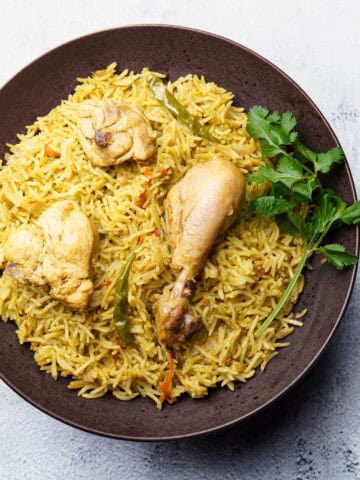
This chicken pulao is what I make when I crave a delicious, comforting rice dish. You don’t have to boil the chicken first, as you would in yakhni pulao, so the cooking time is shorter. And it's easily one of the best pulaos you’ll try.
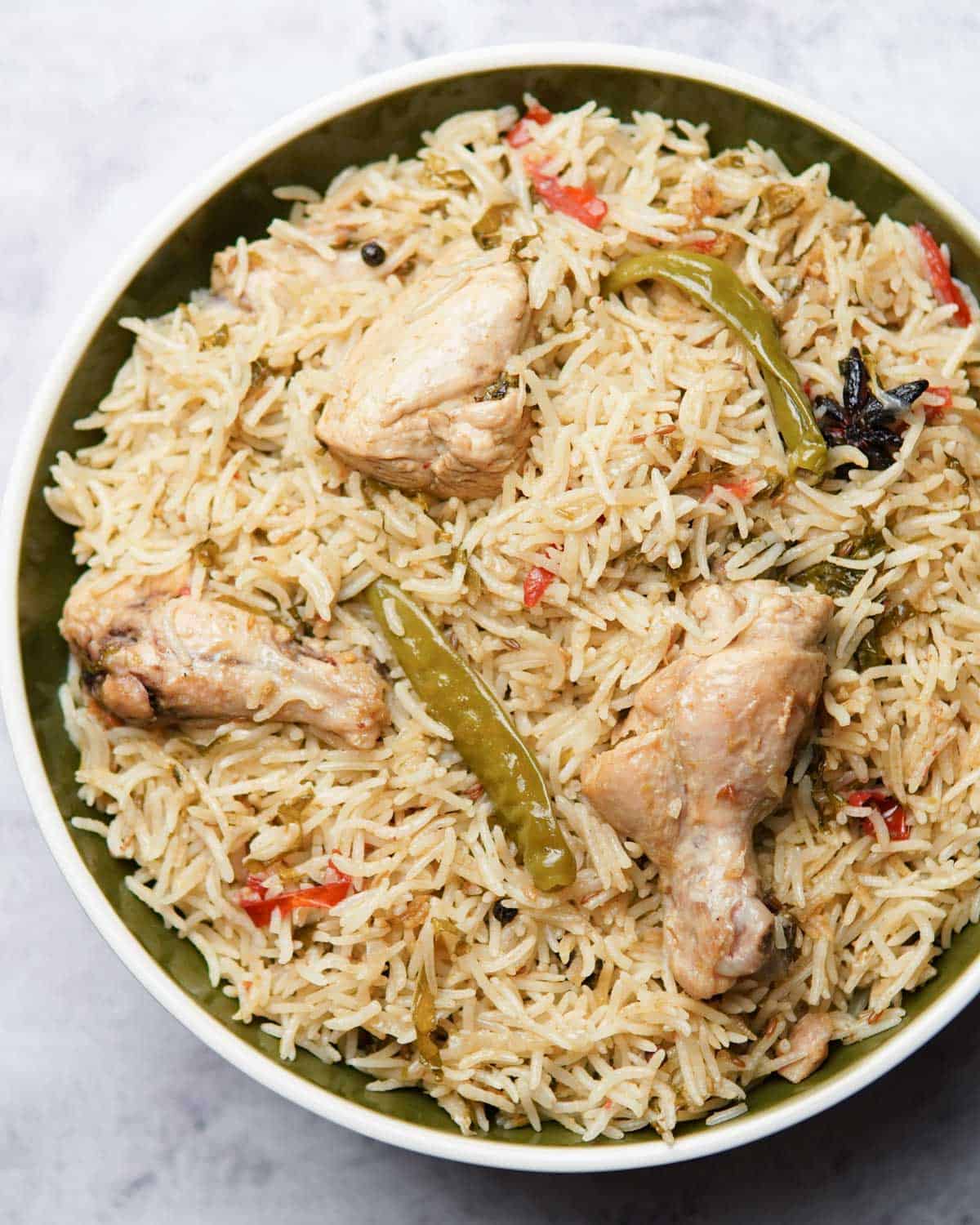
Pulao, whether it's beef, chicken, or mutton, is quintessential Pakistani comfort food. Perfect to make year-round, for big occasions, small ones, or simply when you feel like treating yourself to good food.
Rivaling the best pulaos you might have had, shadi pulaos included, this one’s got all the bits that make South Asian food so good on the taste buds.
You’ve got fresh ginger, garlic, chilies, and whole spices as solid aromatics, and then the rice goes on dum in a fragrant, flavor-packed bath of fresh herbs, tomato, and some lemon juice. You’re going to want to make this on repeat.
Of all the pulao recipes I’ve shared on this blog so far, and the ones I’ll share in the future, this one will have a permanent spot in my top three favs.
I’ve shared my best tips for perfectly cooked chicken and also for rice that’s so fluffy and tasty, it’s guaranteed to get you compliments.
Pre-cooking notes
- I only use fresh ginger-garlic-green chili paste for this recipe. The taste just won’t be the same if you go with store-bought pastes.
- Regular basmati rice works fine if that’s all you have (instead of basmati sella), but it’s much less forgiving if you overcook, and you won’t get that restaurant-quality result. If using regular basmati, soak for 30 minutes and steam for 10 minutes instead of 15. Everything else in the process stays the same.
- Red or yellow onions both work perfectly. I’ve never noticed any real difference in overall taste.
- Green chilies appear twice in the ingredient list, and that’s on purpose. A few go into the paste, and some more are for the dum. Chilies can vary a lot in spice, so adjust the quantities as you see fit.
- You can use boneless chicken, but bone-in is what I prefer. If your butcher asks how you want it cut, tell them 12 to 14 pieces, depending on the size of your chicken. Or just mention you need it in the right size for pulao or biryani.
- I like to use yogurt that’s a few days old, as fresh store-bought yogurt just isn’t tangy enough for desi cooking.
- Most people use kewra water only in biryani, but I love adding it to this pulao too. It adds a subtle layer of complexity, like in a catered, shadi-style pulao.
A visual guide for making my chicken pulao
Here are photos of the key steps to guide you through the recipe. For a printable version with quantities and notes, see the recipe card below.
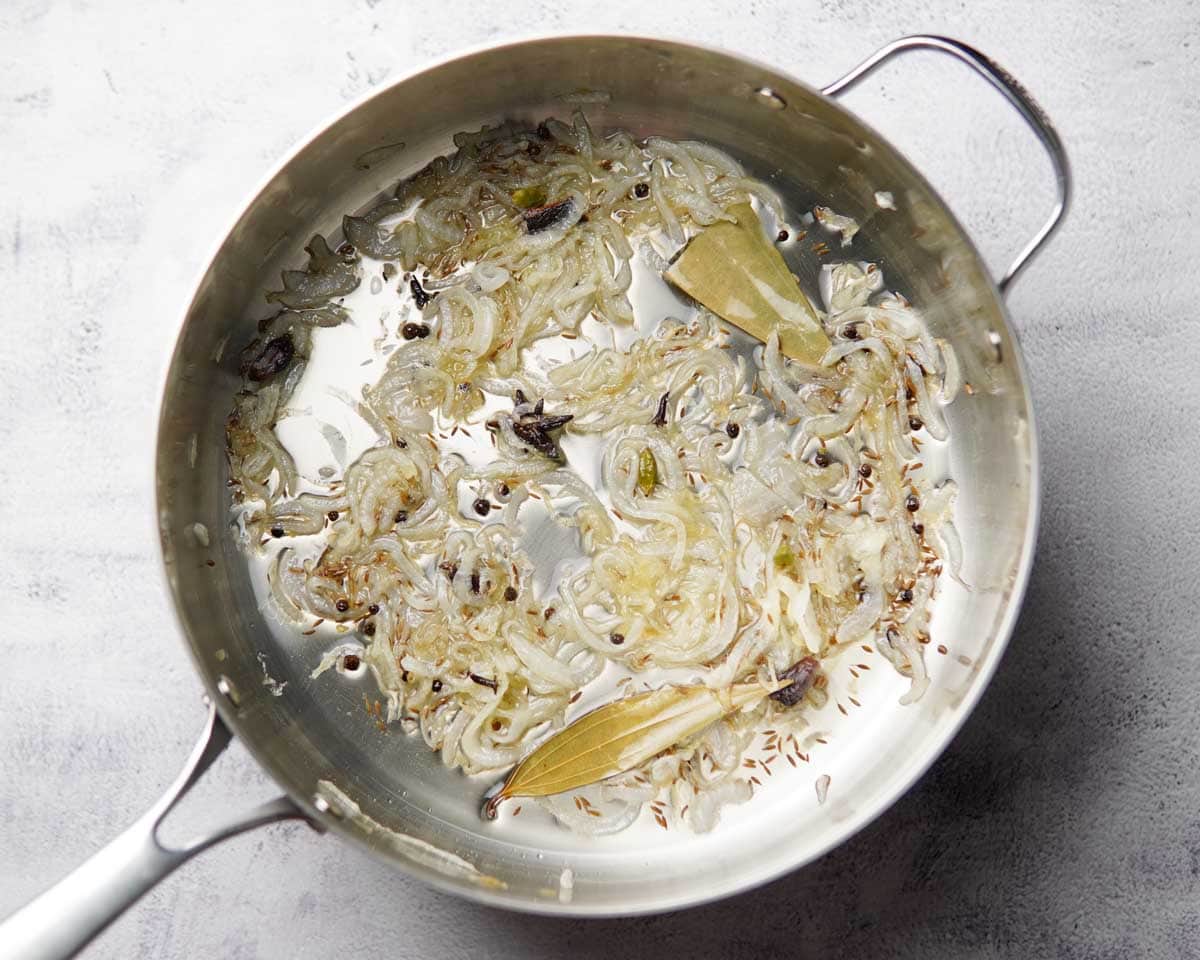
Blend garlic, ginger and 3 green chilies into a paste, and set aside. Heat oil in a large pot/saucepan over medium heat, add onion and cook until it softens. Then add black peppercorns, cloves, star anise, cinnamon, black cardamoms, green cardamoms, cumin seeds, bay leaves, and saute for a minute.
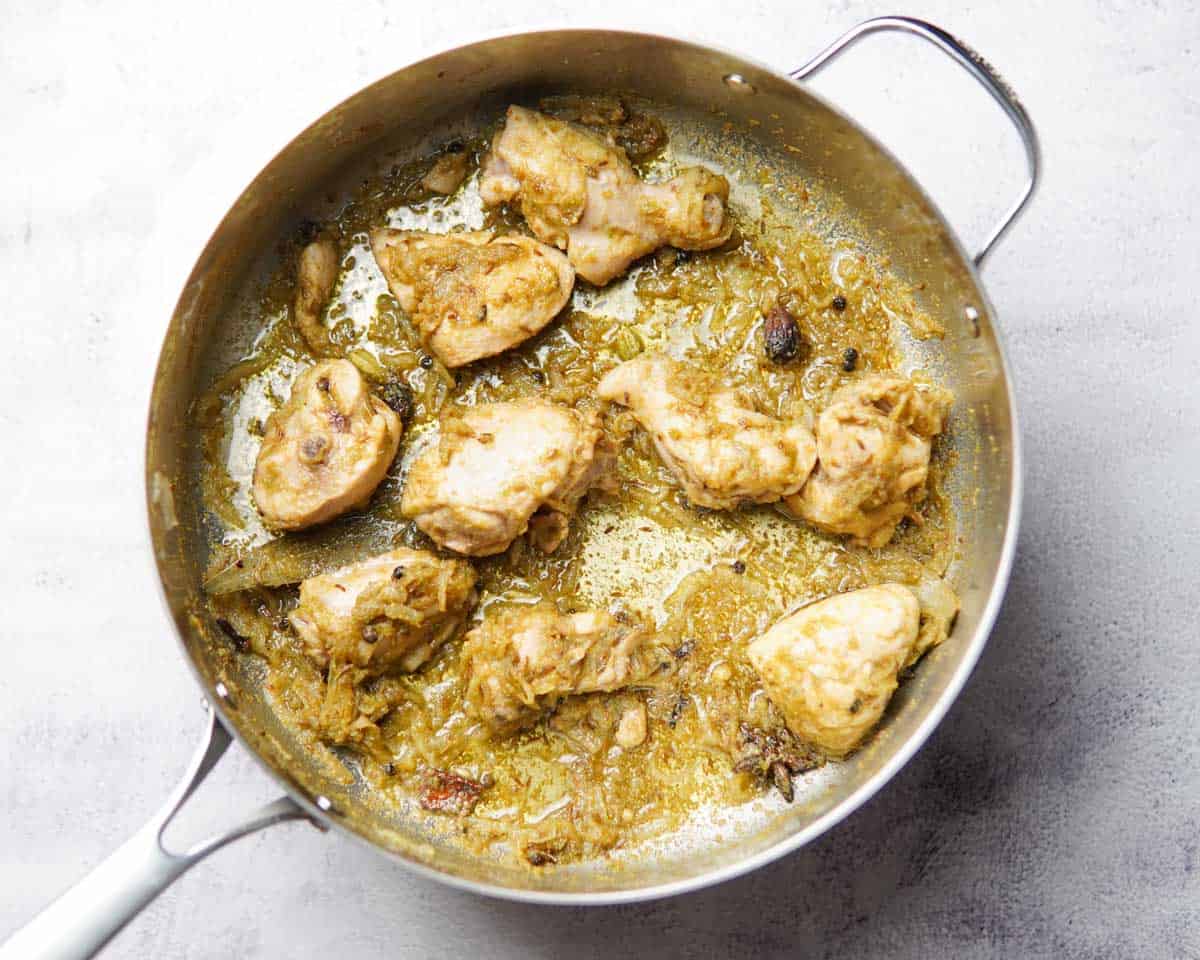
Add chicken and cook until no longer pink.
Add ginger-garlic-green chili paste and cook for 2 minutes. Mix in salt, coriander powder, fennel powder and cook for 2 more minutes.
Add yogurt and cook for 5 to 6 minutes or until the chicken is almost done.
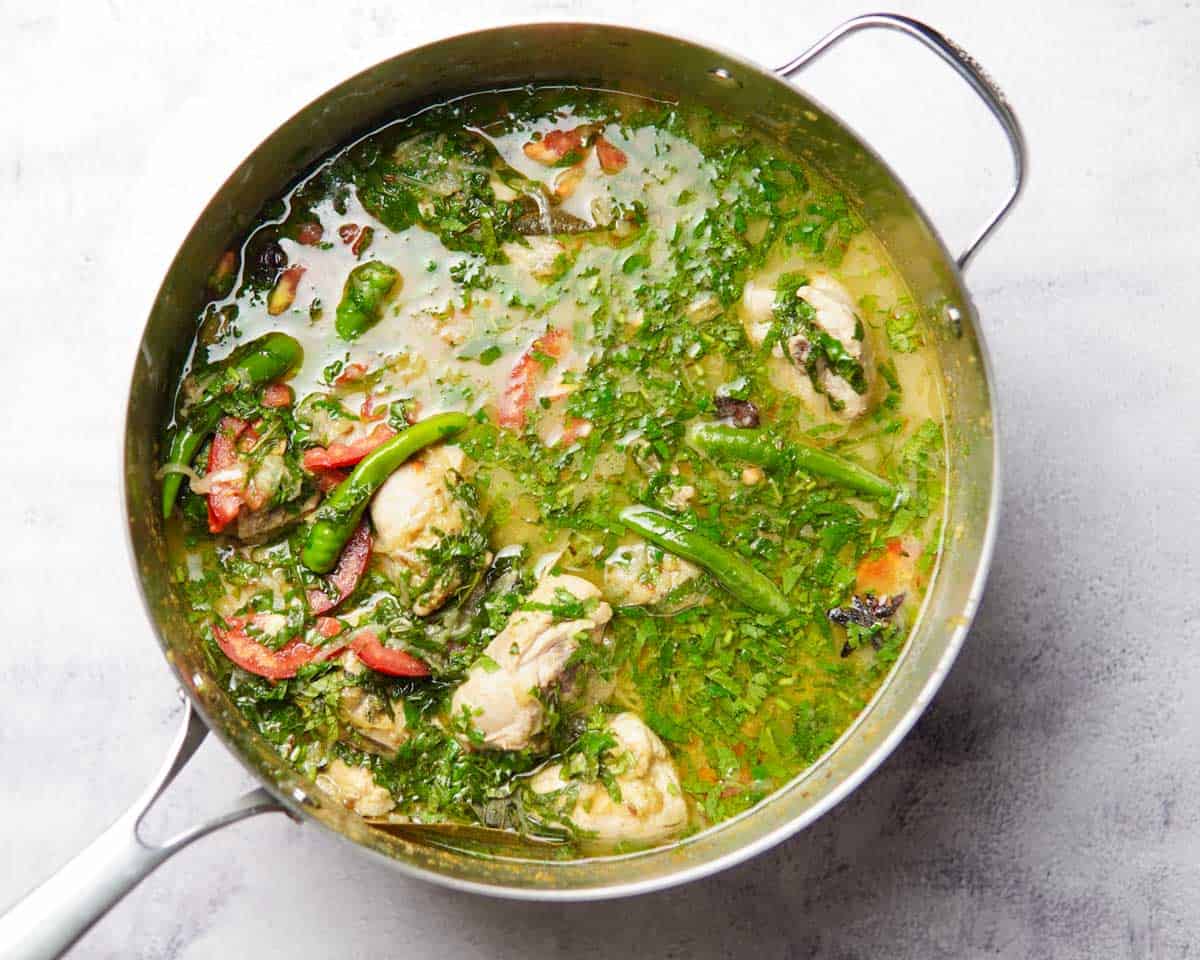
Pour in 3 cups of water and bring to a boil over medium-high heat. Add sliced tomato, chopped cilantro, chopped mint, whole green chilies and mix well.
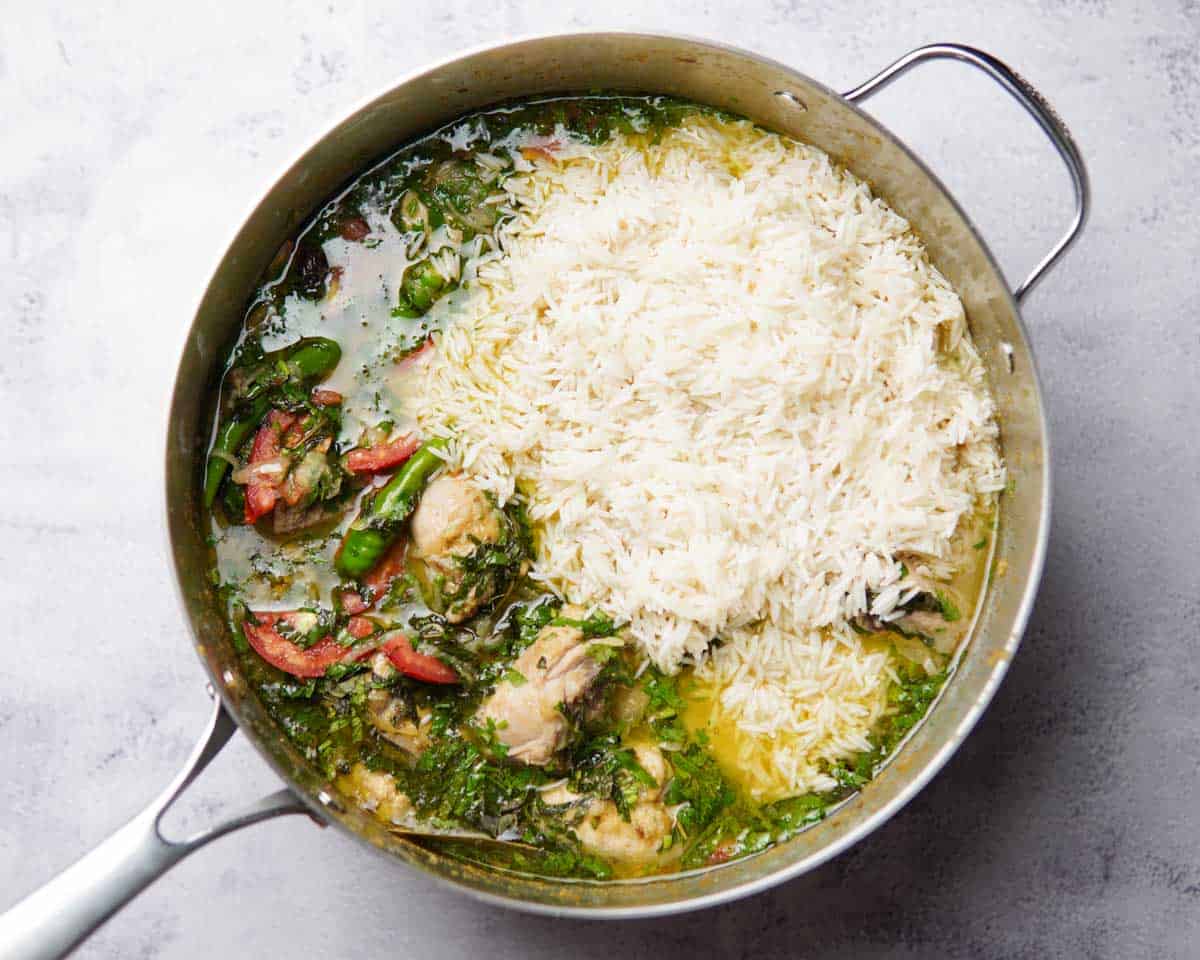
Then add the soaked, drained rice along with kewra water, lemon juice and gently stir to mix.
Partially cover, let liquid reduce over med-high heat (or medium if burner is strong). As liquid cooks down, you'll start to see small bubbles and steam holes across the surface of rice. That’s your cue to give it a brief, gentle stir.
Cover completely, reduce heat to lowest setting. Let it steam 15 minutes. DO NOT remove the lid.
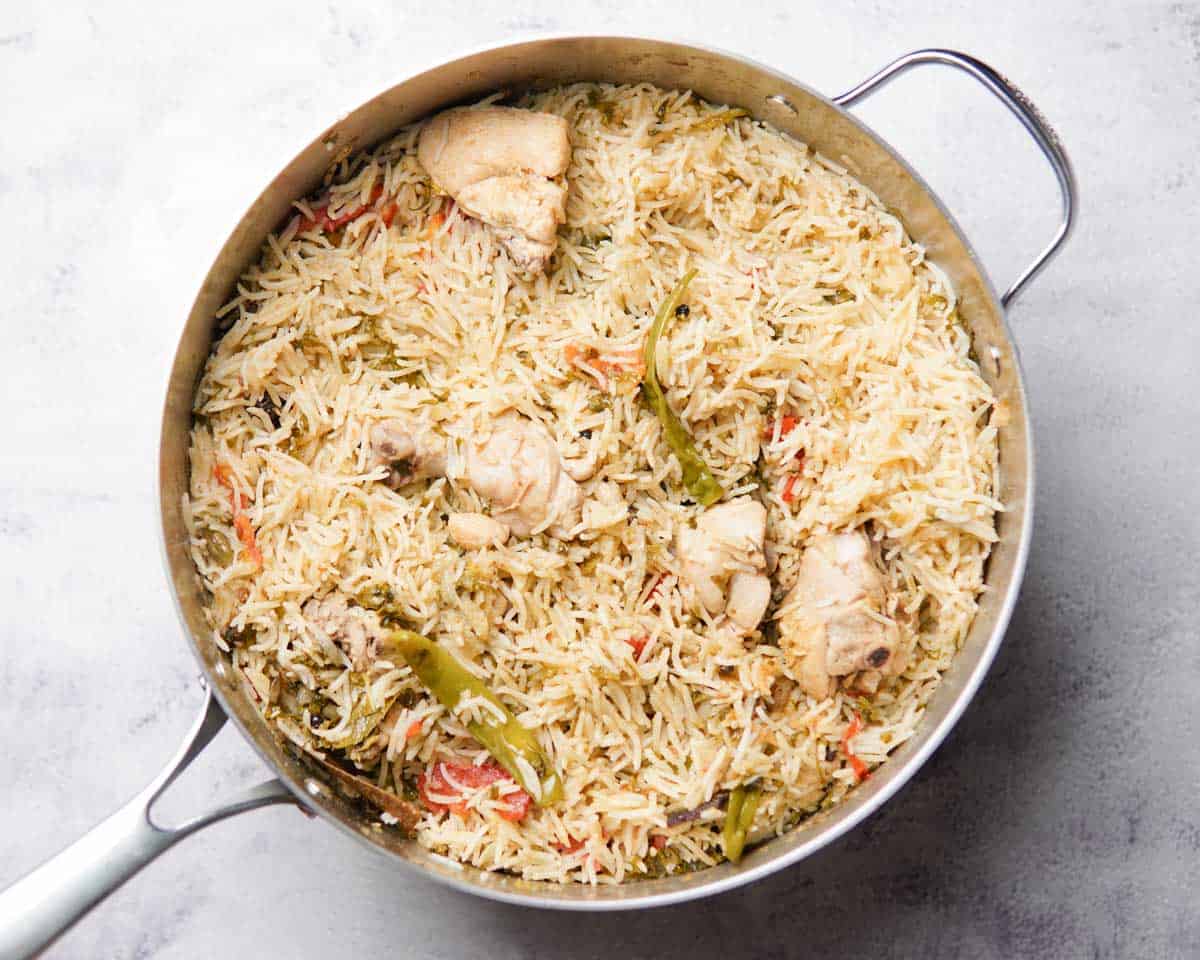
Turn off the heat. DO NOT remove the lid yet. Leave pot on the same burner. Let rice rest for 15 minutes, and then serve.
Top tips
- Don’t skip the soak step, whether you’re using regular basmati or sella. Sella needs a minimum of 2 hours (I’ve stretched it to 4 hours too), but if you’re in a rush, soak it in warm (not hot) water for an hour.
- During the steaming step and the final dum, DO NOT remove the lid. Once that steam escapes, it’s really hard to build it back up. You’ll either have to add water and risk ending up with mushy rice, or try to finish cooking without that steam and hope the rice comes out okay.
- I know 3 cups of water for 2 cups of rice may seem insufficient, especially since a lot of people are used to 2 cups of water per cup of rice, but trust my experience, don't add more.
What I serve with this pulao
As with most South Asian rice dishes I make, I love kachumbar and raita with this pulao too. Green chutneys also pair well, but I avoid achars since they can overwhelm the delicate flavors.
I hope you'll give this recipe a try, and if you do, I'd love to hear your thoughts in the comments section down below.
Happy cooking – Nelo
Chicken Pulao (Chicken Rice Pilaf)
Ingredients
For the fresh ginger garlic chili paste
- 8 cloves garlic - peeled
- 1 inch piece ginger - peeled, cut into a few pieces
- 3 small green chilies - (see Note A)
For pulao
- ½ cup (118 ml) cooking oil - any neutral oil
- 1 medium onion - very thinly sliced
- ½ teaspoon whole black peppercorns - aka sabut kali mirch
- 6 cloves - aka laung
- 1 whole star anise - aka badiyan ka phool
- 1 inch piece of cinnamon stick - aka dalchini
- 3 whole black cardamoms - aka bari elaichi
- 3 whole green cardamoms - aka choti elachi, pods should be fully intact
- 1.5 teaspoons cumin seeds - aka safaid zeera
- 2 small bay leaves - aka tez patta, use less if the leaves are big
- 1 pound (500 g) chicken - skinless, bone in, cut into pieces (Note B)
- 2.5 teaspoons salt
- 1 tablespoon coriander powder - aka dhaniya powder
- 1 teaspoon fennel powder - aka saunf powder
- ¼ cup plain yogurt - mix until smooth
- 3 cups water
- 1 small tomato - thinly sliced, I use roma tomatoes
- ¼ cup finely chopped cilantro - aka coriander/dhaniya
- ¼ cup finely chopped mint - aka pudina
- 6 small green chilies - whole, uncut
- 2 cups (400 g) sella/parboiled basmati rice - washed, soaked for 2 hours, then drained (see Note C)
- 1 tablespoon kewra water
- 2 tablespoons lemon juice - fresh
Instructions
- Blend garlic, ginger and 3 green chilies into a paste, adding just enough water to make it smooth. Set aside.
- Heat oil in a large pot/saucepan over medium heat. Add sliced onion and cook until it softens and just starts to change color, don't let it turn golden.
- Add black peppercorns, cloves, star anise, cinnamon, black cardamoms, green cardamoms, cumin seeds, bay leaves, and saute for 1 minute.
- Add chicken pieces and cook until no longer pink.
- Add ginger-garlic-green chili paste you made, stir and cook for 2 minutes.
- Mix in salt, coriander powder, fennel powder and cook for 2 more minutes.
- Add yogurt and cook for 5 to 6 minutes or until the chicken is almost done. Add a few tablespoons of water, only if needed.
- Pour in 3 cups of water and bring to a boil over medium-high heat.
- Add sliced tomato, chopped cilantro, chopped mint, 6 whole green chilies (pull the stems out, but chilies should have no cuts or openings to avoid extra heat). Mix well.
- Then add the soaked, drained rice along with kewra water, lemon juice and gently stir to mix.
- Partially cover the pot with lid and let liquid reduce over medium-high heat (or medium if your burner is strong). Don't stir yet, just keep an eye. At first, the bubbles on the surface will be big and vigorous. As the liquid cooks down further, you'll start to see small bubbles and steam holes across the surface. That’s your cue to give a brief, gentle stir. Some liquid (around 10 to 20 percent) will still be left, which is intended.
- Cover completely with lid right away, and reduce heat to the lowest setting. Let it steam for 15 minutes. If using regular basmati instead of sella basmati, steam 10 minutes instead. DO NOT remove the lid. No peeking, no stirring.
- Turn off the heat. DO NOT remove the lid yet and leave the pot on the same burner. Let the rice rest for 15 minutes so it finishes cooking in residual heat.
- After the resting time, remove the lid, plate the rice using a flat, wide utensil like a rice paddle, and enjoy.
Leave a Comment