

This prawn pulao is one of my favorite Pakistani seafood dishes. Sure, prawns aren't exactly cheap to buy, but for this one, it's money well spent. Simple ingredients, ridiculously good taste, it's a rice meal done right!
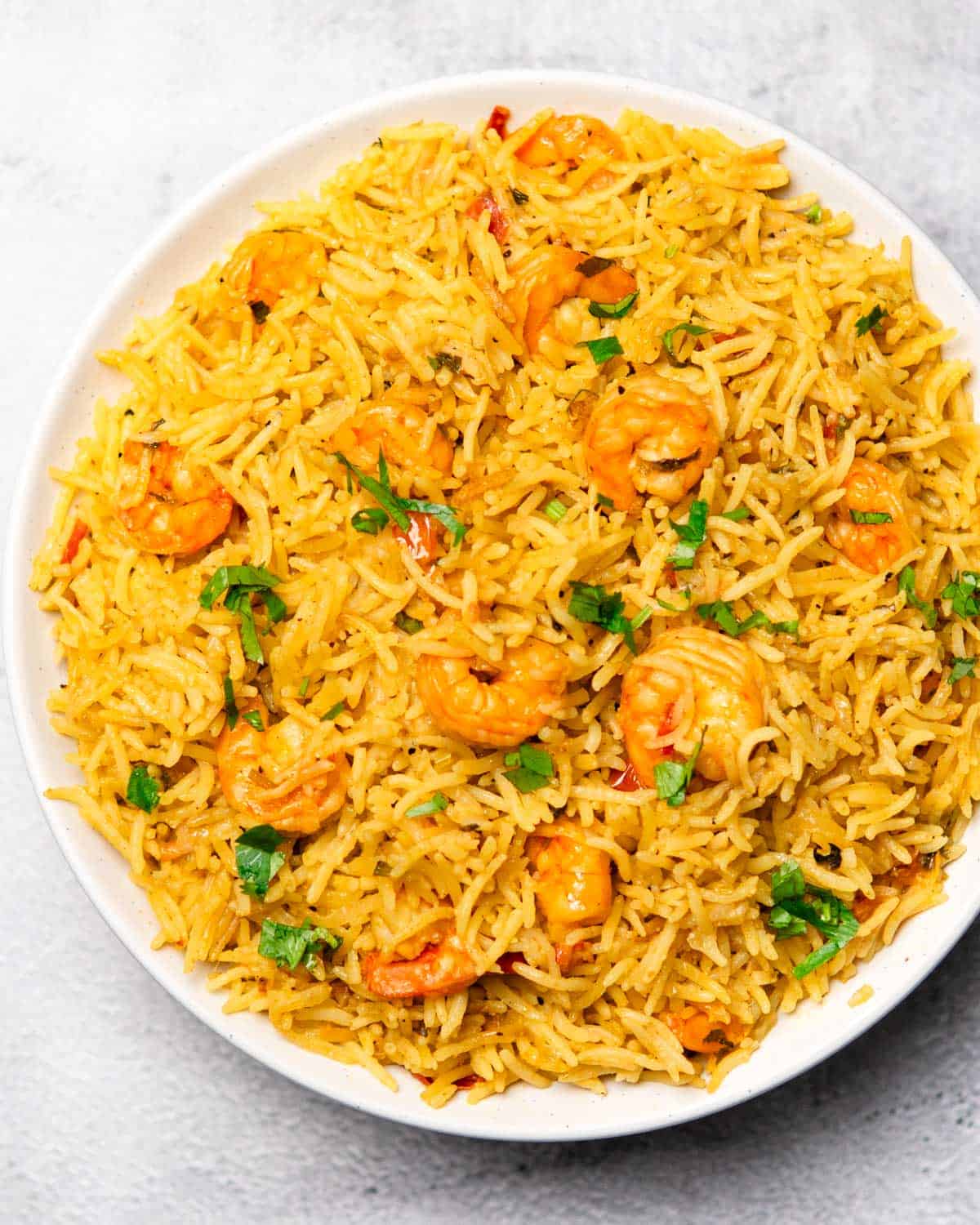
Unlike the more traditional method of making this dish, I don't saute the prawns too long. A minute or two of bathing them in the spiced base, then I quickly add water, before putting the rice in.
If you cook too much, prawns will shrink (like a lot), and that's overcooked territory. They get plenty of time later to finish cooking with the rice.
In one of my test recipe versions, I skipped the sauteing step, put them straight into the boiling broth to see if I could get away with even less shrinking. But the prawns didn't take on the full flavor. And the rice didn't turn out as tasty either.
All that to say, my method is well-tested, the taste is friends-and-friendly approved, and I won't be surprised if you tell me the "eww-prawns" crowd at your table cleaned their plates too. Yep, it's that good!
If you're looking for other delicious pulao recipes, give me chicken and beef pulao recipes a try. Both are absolute crowdpleasers!
Pre-cooking notes
- Red and yellow onions both work. Slice as thinly as possible so you don't end up with stringy bits in the finished dish.
- I always use Roma/plum tomatoes for all my south asian recipes. Other kinds can be unpredictable (in my experience). I’ve had a few dishes turn somewhat sweet.
- You can use chicken bouillon powder or granules instead of a cube.
- I prefer large or jumbo-sized shrimp/prawn. Smaller ones are fine too, but then the cooking time will be less. If using frozen prawns, add about 25% more to the total weight to account for the ice glaze. For example, if the recipe calls for 1 pound of prawns, weigh out about 1.25 pounds of frozen ones. Oh, and thaw them completely before use.
- Fresh chilies come in all different sizes and spice levels, so rely on your best judgment to adjust the quantity of broken chilies. The whole ones added to the broth contribute to the aroma rather than the heat, so I'd not worry too much about their amount. I use Thai/bird's eye chilies. Sometimes, a combo of red and green ones for a nice pop of color, but feel free to use just the green ones.
- Don't use bottled, store-bought lemon juice. Fresh juice only, please.
- Sella basmati is my only pick for all pulao and biryani recipes. Holds up much better to overcooking than regular basmati. That said, you can use regular basmati, but there will be an adjustment to the soak and cook time, which I’ve shared in the recipe card below.
A visual guide for making Prawn Pulao
Here are photos of the key steps to guide you through the recipe. For a printable version with quantities and notes, see the recipe card below.
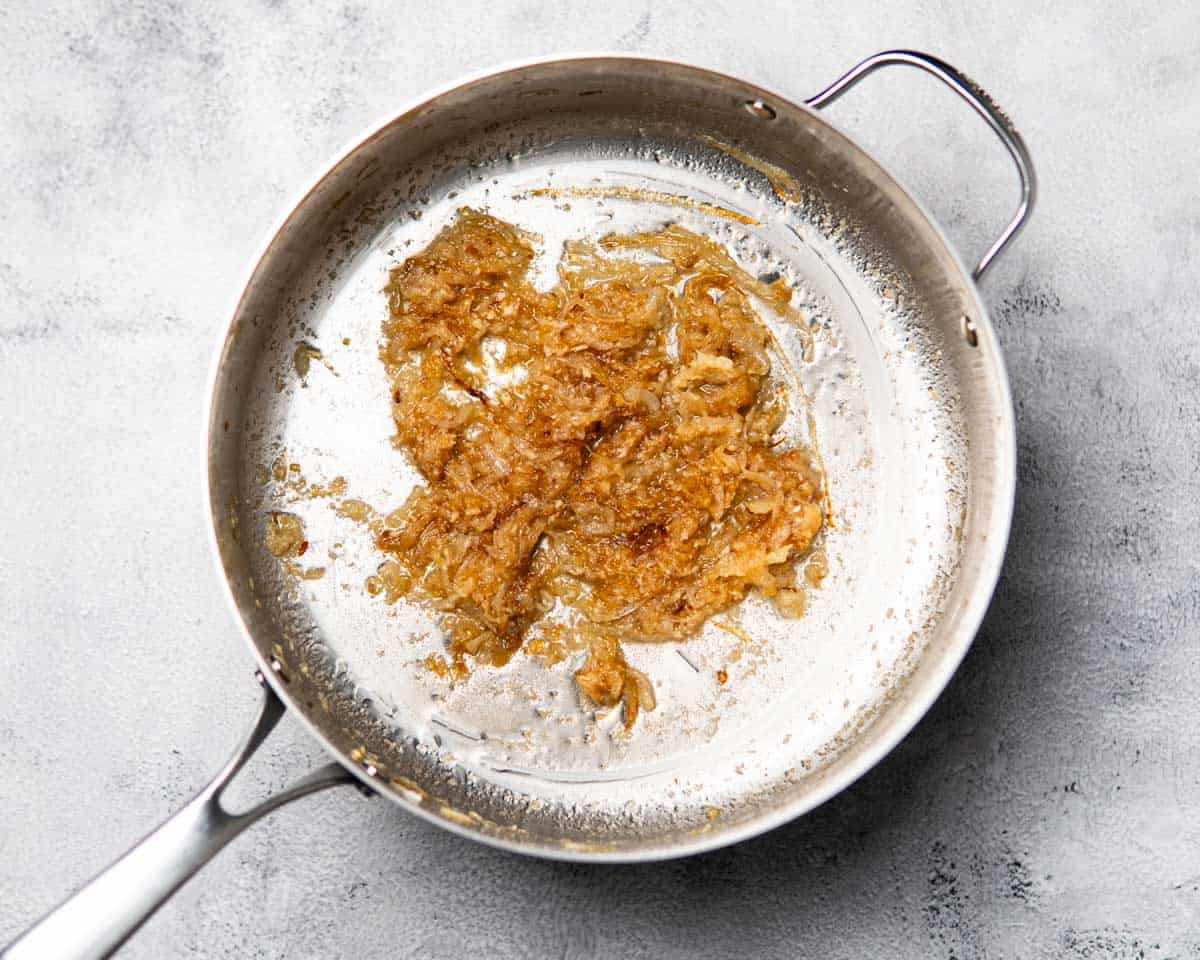
Heat oil in a large pot/saucepan over medium-high heat. Add onion and cook until it turns golden. Add ginger and garlic pastes, saute briefly.
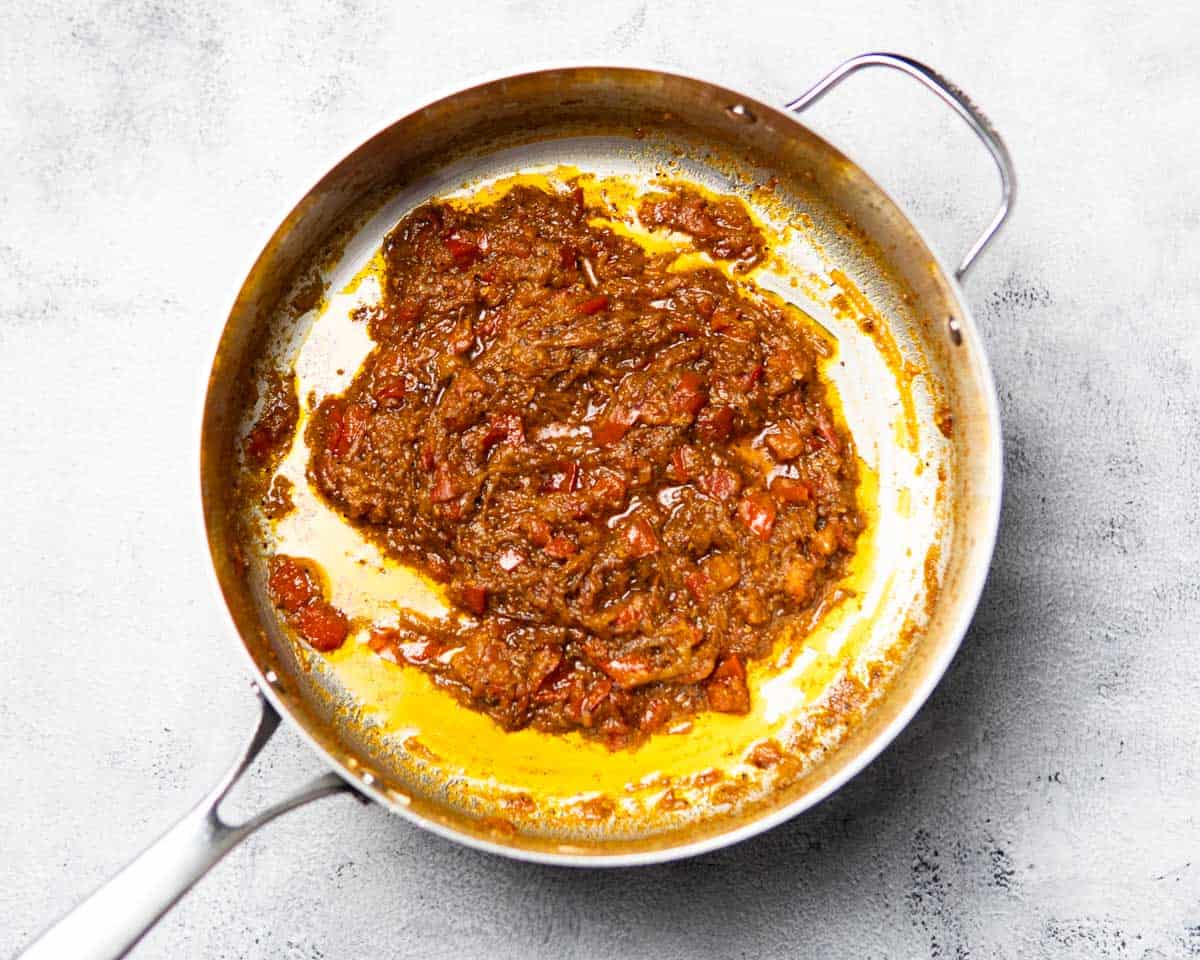
Mix in tomatoes, chopped chillies, and let them soften. Then spice mix (mentioned in the recipe card below) and chicken cube. Stir 2 minutes. Don't let the spices burn. Add a couple of tablespoons of water and lower the heat (if needed) during this step.
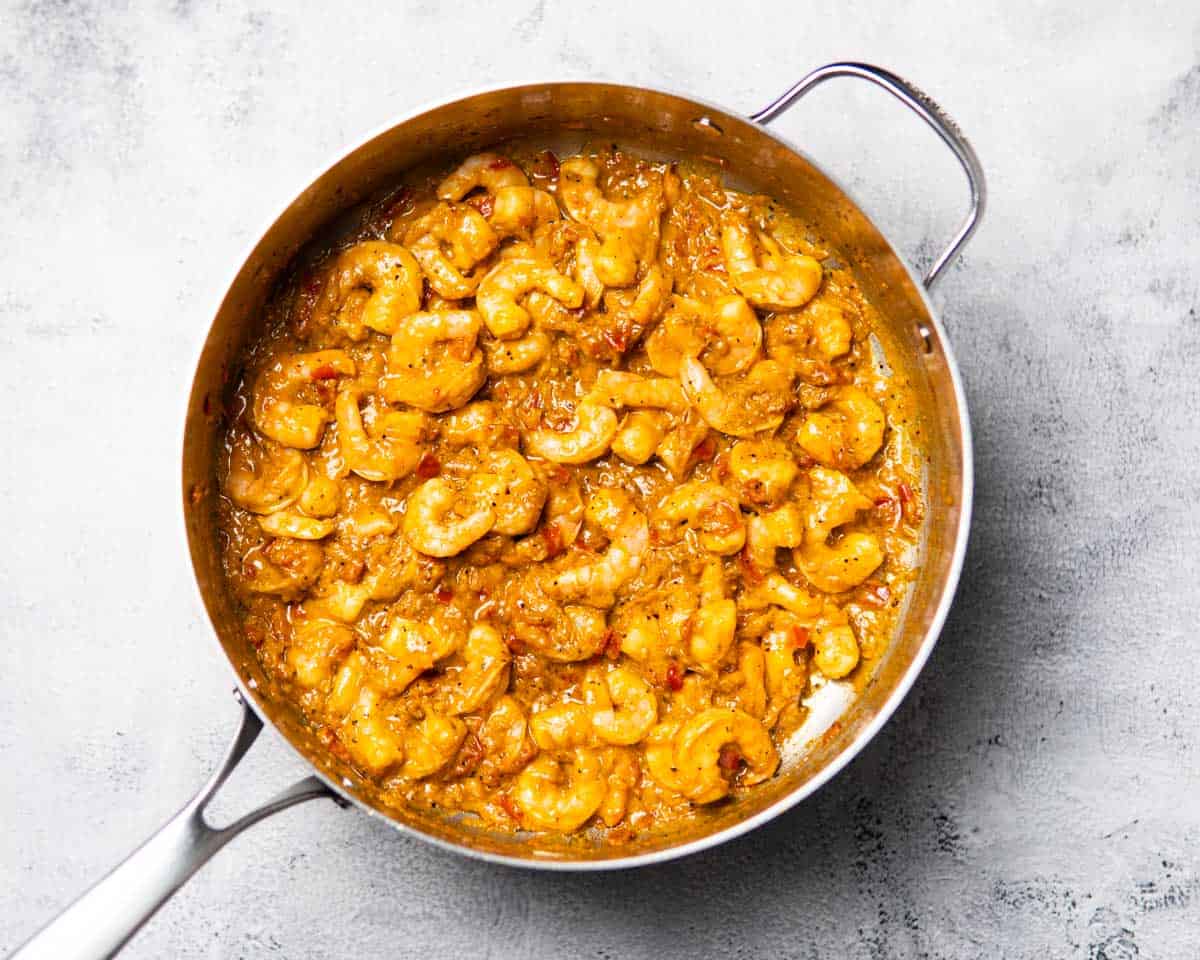
Add yogurt, mix for 30 seconds, then add prawns/shrimp. Gently stir and cook just until the prawns start to change color. Don't cook more than a minute or two. They will finish cooking in the later steps.
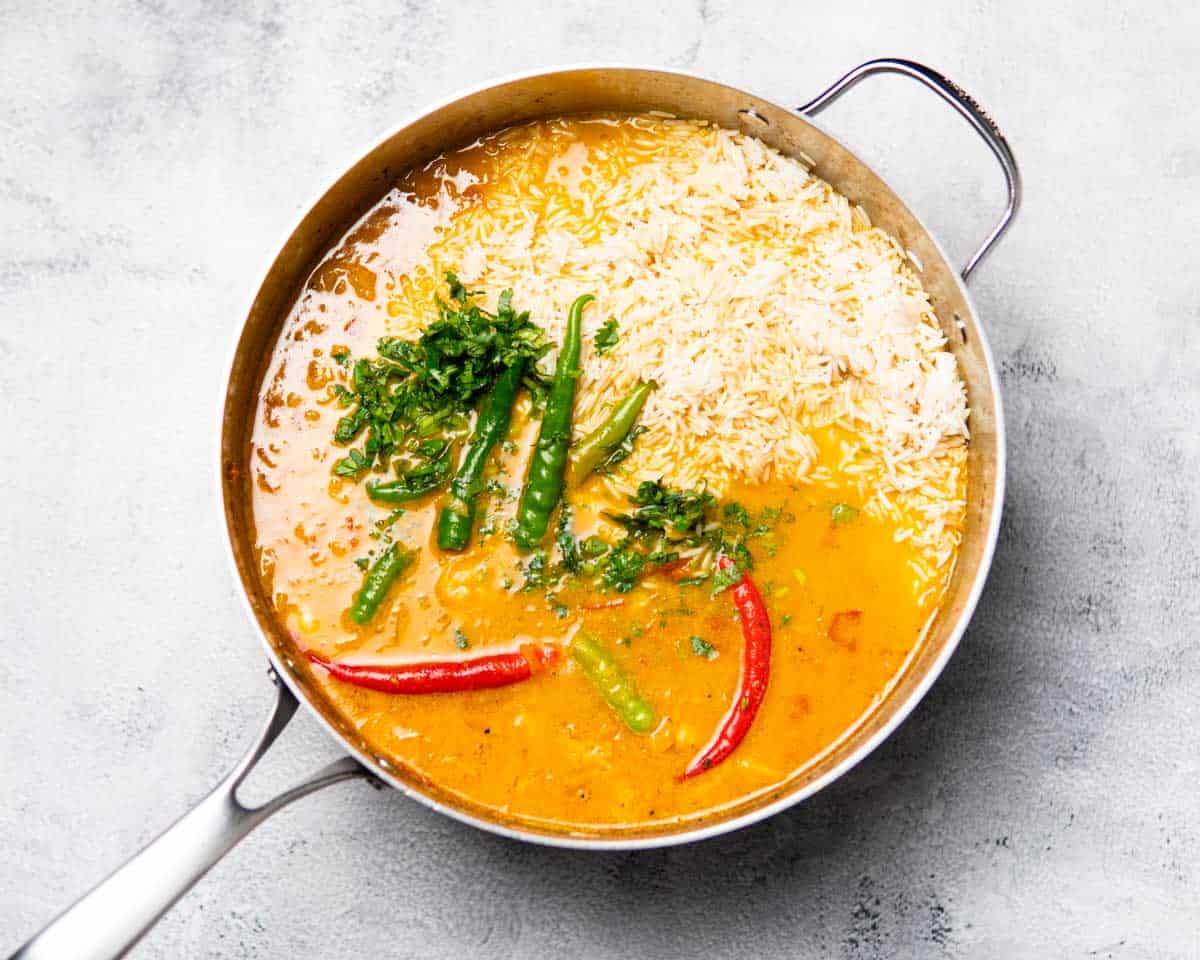
Pour in 2.5 cups of water, cover, bring to a boil. Add 4 whole chilies, cilantro, lemon juice. Then add sella rice and gently mix.
Partially cover, let liquid reduce over med-high heat (or medium if burner is strong). As liquid cooks down, you'll start to see small bubbles and steam holes across the surface of rice. That’s your cue to give it a brief, gentle stir.
Cover completely, reduce heat to lowest setting. Let it steam 15 minutes. DO NOT remove the lid.
Turn off the heat. DO NOT remove the lid yet. Leave pot on the same burner. Let rice rest for 15 minutes, and then serve.
Top tips
- It's important to roast the spices well when you add them to the softened tomatoes. Bhunofying is important to bring out all the flavors. Oh and don't let the masala paste burn. Add a very small quantity of water, as and if needed, to keep it from sticking.
- Use a pot/saucepan that's heavy-bottomed (preferably non-stick). Should also be wide. In a narrow cookware, there wouldn't be enough surface area for the food to saute and fry. Instead, it'll steam. Also, heavy-bottomed ones allow for evenly cooked rice.
- Sella basmati rice requires 2 hours of soak time. But, in a rush, you can soak it in warm (not hot) water for an hour. The cooked grains won’t bloom as much as they do after a full soak, but will still give better results than regular basmati.
Serving ideas
Some freshly made kachumber is my go-to accompaniment for this dish. Or just some sliced onion seasoned with salt and fresh lime/lemon juice. You can also serve raita on the side.
I’d love to hear your feedback. If you try this prawn pulao (aka pilaf), please share your ratings and review below.
Happy cooking – Nelo
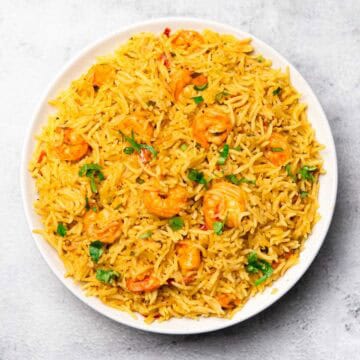
Prawn Pulao (Shrimp Rice Pilaf)
Ingredients
Spice Mix
- 2 teaspoons coriander powder - aka dhaniya powder
- 2 teaspoons regular white salt - aka table salt
- 1 teaspoon cumin powder - aka zeera powder
- ½ teaspoon red chili powder - adjust to taste ⓘ
- ½ teaspoon garam masala
- ½ teaspoon black pepper powder
- ¼ teaspoon turmeric - aka haldi
- 2 whole black cardamoms - aka bari elaichi
- 2 whole green cardamoms - aka choti elachi, pods should be intact, not broken
- 1 small star anise - aka badiyan ka phool
For Pulao
- ½ cup (120 ml) cooking oil
- 1 large (200 g) onion - finely sliced
- 1 tablespoon ginger paste
- 1 tablespoon garlic paste
- 1 medium (100 g) tomato - finely chopped. I prefer roma tomatoes
- 2 small green chillies chopped - I use Thai chilies, adjust to taste ⓘ
- 1 chicken cube - crumbled into small pieces
- ¼ cup (60 g) yogurt - whisked until smooth
- 1 pound (500 g) shrimp / prawns - aka jhinga. Uncooked, peeled, tail off, deveined
- 4 whole small green or red chilies - I use Thai chilies, adjust to taste ⓘ
- ¼ cup finely chopped cilantro - aka coriander/hara dhaniya, packed tightly into the measuring cup
- 3 tablespoons lemon juice - freshly squeezed
- 2 cups (400 g) sella/parboiled basmati rice - washed, soaked for 2 hours, then drained (Note A)
Instructions
- Combine all the ingredients listed under "Spice Mix" in a small bowl. Set aside.
- Heat oil in a large pot/saucepan over medium-high heat, or medium if your burner runs hot. Add sliced onion and cook until it turns golden (but not brown).
- Add ginger paste, garlic paste, saute 30 seconds. Mix in chopped tomato, 2 chopped green chilies and ¼ cup water. Cook until the tomato is softened and broken down.
- Add the prepared spice mix and crumbled chicken cube. Stir continuously for 2 minutes or until the oil starts to separate. To prevent the spices from burning, add a couple of tablespoons of water and lower the heat, if needed.
- Add yogurt, stir for 30 seconds, then add prawns/shrimp. Gently stir and cook just until the shrimp start to change color. Don't cook more than a minute or two. They will finish cooking in the later steps.
- Pour in 2.5 cups of water, cover the pot, bring to a boil. Pull out the stems of 4 chillies, leave them whole. Make sure they have no cuts or openings to avoid extra heat.
- When the water is boiling, add these whole chilies, cilantro (coriander), lemon juice. Then add the soaked, drained rice and gently stir to mix.
- Partially cover the pot with lid and let liquid reduce over medium-high heat (or medium if your burner is strong). Don't stir yet, just keep an eye. At first, the bubbles on the surface will be big and vigorous. As the liquid cooks down further, you'll start to see small bubbles and steam holes across the surface. That’s your cue to give a brief, gentle stir. Some liquid (around 10 to 20 percent) will still be left, which is intended.
- Cover completely with lid right away, and reduce heat to the lowest setting. Let it steam for 15 minutes. If using regular basmati instead of sella basmati, steam 10 minutes instead. DO NOT remove the lid. No peeking, no stirring.
- Turn off the heat. DO NOT remove the lid yet and leave the pot on the same burner. Let the rice rest for 15 minutes so it finishes cooking in residual heat.
- After the resting time, remove the lid, plate the rice using a flat, wide utensil like a rice paddle, and enjoy.
Leave a Comment